

If you plan to get a dental implant, you may wonder if you also need a bone graft. The answer depends on how much healthy jawbone you have. When your bone is too thin or too soft, an implant may not stay secure without extra support.
You need a bone graft before a dental implant when your jawbone does not have enough height, width, or density to hold the implant firmly in place.
Bone loss can happen after tooth loss, gum disease, or injury. In many cases, your dentist can rebuild the area so your implant has a strong base.
You do not always need a bone graft. Some people have enough natural bone for an implant right away. Understanding your options helps you feel more confident about your treatment and what comes next.
Key Takeaways
- You may need a bone graft if your jawbone cannot support an implant securely.
- Dentists use different graft materials and techniques based on your needs.
- Healing time and overall health affect how well your graft and implant succeed.
Schedule a bone graft for dental implant consultation in High Point, NC today.
When Is a Bone Graft Necessary for Dental Implants?
You may need a bone graft when your jawbone cannot firmly support a dental implant. Dentists look at bone height, width, and density to decide if implant placement will stay stable over time.
How Jawbone Loss Affects Implant Success
Your jawbone starts to shrink soon after tooth loss. When a tooth root no longer stimulates the bone, the body slowly reabsorbs that area. This jawbone loss can reduce both height and thickness.
A dental implant needs strong, healthy bone to stay secure. If your jawbone density is too low, the implant may not bond well to the bone. Poor bonding raises the risk of implant failure.
You may also see changes in your facial shape when bone shrinks. The ridge can become narrow or uneven, which makes proper implant placement harder.
In many cases, a graft rebuilds the lost area so the implant can anchor firmly.
Determining Bone Graft Need: Diagnosis and Evaluation
Your dentist does not guess whether you need a bone graft. They measure your jawbone carefully before planning implant placement.
A clinical exam checks your gum health and ridge shape. Then imaging provides more detail. Many offices use cone beam computed tomography (CBCT) to create a 3D view of your jaw.
CBCT scans show:
- Bone height
- Bone width
- Bone density
- Location of nerves and sinuses
This data helps your dentist decide if your jawbone can hold an implant safely. If bone volume falls below safe limits, grafting lowers the risk of surgical problems and future failure.
Risks of Skipping a Bone Graft
If you skip a needed bone graft, the implant may not stay stable. Weak support can cause early movement during healing. Even small movement can prevent proper bonding between the implant and your jawbone.
Over time, poor support may lead to:
- Implant failure
- Ongoing jawbone loss
- Gum recession
- Poor implant angle or bite problems
In the upper back jaw, low bone height near the sinus can also limit safe placement. Some patients need procedures such as sinus lifts or ridge building.
Choosing grafting when your dentist recommends it often protects your investment and supports a stable, long-lasting dental implant.
Visit our High Point, NC office to find out if you need a bone graft for dental implant treatment.
Types of Bone Grafts Used in Dentistry
Dentists use several types of bone grafts to rebuild your jaw before placing an implant. Each option differs in where the material comes from, how it heals, and how it fits your needs.
Autograft and Allograft Materials
An autograft uses bone taken from your own body. Your dentist or surgeon may remove a small amount of bone from your chin, jaw, or hip during bone grafting.
Because the bone comes from you, your body accepts it well. It contains living cells that help grow new bone, which makes it a strong choice for larger defects.
However, you will need a second surgical site. This can increase pain, cost, and healing time.
An allograft uses donated human bone that a tissue bank processes and sterilizes. You do not need a second surgery to collect bone from your body.
Allografts act as a framework for new bone to grow. They do not contain your own living cells, but they work well for many dental bone graft procedures. You can read more about how these materials are used in dentistry in this overview of bone grafts in dental medicine.
Xenograft and Synthetic Bone Graft Options
A xenograft comes from animal bone, most often bovine or porcine sources. Manufacturers remove organic material and leave a mineral structure that is similar to human bone.
This type of bone graft for dental implants supports new bone growth by acting as a scaffold. It is widely used and has a long track record in dental bone grafting.
Some patients have ethical or religious concerns about animal products. While processing lowers health risks, you should still review this option carefully with your dentist.
A synthetic bone graft, also called an alloplast, is made from lab-created materials such as calcium phosphate or bioactive glass. These materials mimic the mineral part of natural bone.
Synthetic options avoid donor tissue and animal sources. They work well for small to medium defects and are common in socket preservation and sinus lifts.
Choosing the Right Bone Graft for You
Your dentist will not pick a bone graft at random. They will study your bone loss, implant site, and health history before making a plan.
Small defects may respond well to a synthetic bone graft or xenograft. Larger areas may need an autograft because it can form new bone more actively.
You should also think about healing time, cost, and your comfort with donor or animal materials. Ask how each type of bone graft for dental implant placement affects recovery and long-term stability.
When you understand your options, you can take part in the decision and feel more confident about your dental bone grafting treatment.
Schedule your implant consultation today to see if bone grafting is necessary.
The Bone Grafting Procedure Before Dental Implants
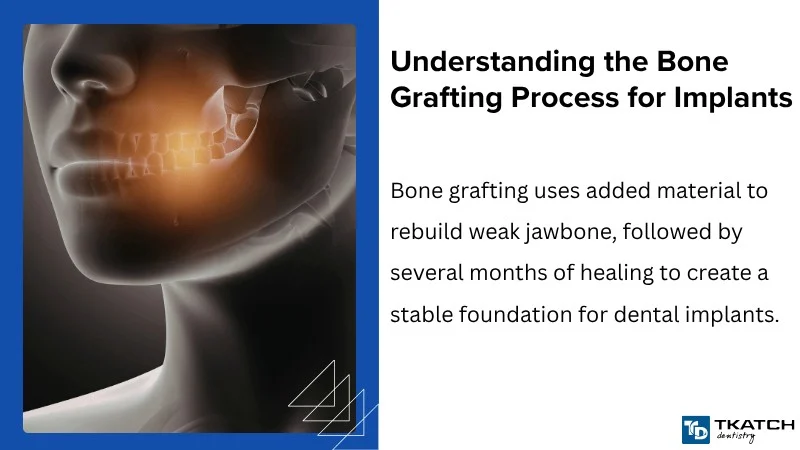
A bone graft before implants rebuilds weak or thin jawbone so it can hold a dental implant firmly. The process includes careful planning, a minor oral surgery, and a healing period before implant placement.
Step-by-Step Overview of Bone Grafting
Your dentist or oral surgeon starts with X-rays or a 3D scan. These images measure your bone height and width and show exactly where support is missing.
On the day of bone graft surgery, you receive local anesthesia. Some offices also offer sedation to help you relax.
The oral surgeon makes a small cut in your gum to reach the bone. They place graft material in the weak area. This material may come from your own body, a donor, an animal source, or a synthetic material.
The graft acts as a scaffold. Your natural bone cells grow into it over time.
The surgeon may cover the area with a small membrane and place stitches. Most visits last about 60 to 120 minutes.
Dental bone graft recovery often includes:
- Mild swelling for a few days
- Minor bleeding
- Soft foods for about a week
Many people return to normal activity within a day or two.
Special Procedures: Sinus Lift and Ridge Augmentation
If you need implants in your upper back jaw, you may need a sinus lift. When teeth are missing for a long time, the sinus can expand and reduce bone height.
During a sinus lift, the surgeon gently raises the sinus lining. They place bone graft material under it to add vertical height.
Ridge augmentation fixes a narrow or uneven jaw ridge. The surgeon adds graft material to widen or build up the area.
These procedures help create a stable base for dental implant placement. Without enough bone, the implant may not stay secure.
Bone Grafting Timing and Implant Placement
Healing time depends on how much bone you need. In many cases, you wait 4 to 6 months before implant placement. Larger grafts or sinus lifts may take longer.
During this time, your body replaces the graft with new, living bone. This step is critical for long-term stability.
In some cases, your dentist can place the implant at the same time as the bone graft before implants. This usually works only when you still have enough natural bone for initial stability.
A detailed exam and 3D scan guide this decision. Careful timing helps ensure your dental implant placement stays strong for years.
What to Expect During Bone Graft Recovery
Bone graft recovery happens in clear stages. You will notice changes in how the area feels during the first week, then slower changes as the bone strengthens over several months.
Healing Timeline and Stages
Most dental bone graft recovery follows a steady pattern. In the first 1–3 days, you can expect swelling, mild bleeding, and tenderness. The area may feel sore when you chew or talk.
By days 4–7, swelling usually goes down. Your gums begin to close over the graft. Many people feel much better within 7–10 days.
Even when you feel normal, the bone is still healing. Over the next 2–6 months, your jaw builds new bone around the graft. This process makes the area strong enough to support a dental implant.
Your dentist will check your progress before placing the implant. Healing time can vary based on your health, the size of the graft, and how well you follow care instructions.
Managing Discomfort and Care Tips
Some bone graft pain is normal during the first few days. You can manage pain with prescribed or over-the-counter pain medicine, as directed by your dentist.
Use cold packs on your face for 20 minutes at a time during the first 24 hours. Keep your head raised when you rest. These steps help reduce swelling.
Follow these basic care tips to protect your oral health:
- Eat soft foods like yogurt, eggs, mashed potatoes, and soup
- Avoid straws, smoking, and alcohol
- Do not chew on the graft side
- Brush other teeth gently and avoid the surgical site
Call your dentist if you notice heavy bleeding, fever, or pain that gets worse after day three. Quick action helps prevent problems.
Follow-Up and Long-Term Outcomes

You will attend follow-up visits so your dentist can check healing. They may take X-rays to see how well the graft is bonding with your natural bone.
Once the graft becomes strong and stable, you can move forward with implant placement. Strong bone support improves implant success and protects your long-term oral health.
Keep in mind that bone graft cost often includes the procedure itself, materials, and follow-up care. The final cost depends on the size of the graft and whether you need other treatments.
With proper care and regular dental visits, most grafts heal without issues. Your effort during recovery plays a big role in the final result.
Factors That Affect Bone Grafting and Implant Success
Your bone strength, gum health, and medical history all shape the outcome of dental implant surgery. You need enough healthy bone and stable gums to support long-term implant function.
Jawbone Quality and Systemic Health
Your jawbone must have enough height, width, and density to hold a dental implant in place. If you have missing teeth for a long time, the bone in that area can shrink. This bone loss makes it harder to secure an implant without a graft.
A dentist often uses 3D imaging to measure your bone before surgery. If the bone looks thin or soft, you may need a graft to rebuild support.
Your overall health also matters. Conditions like diabetes, immune disorders, or heavy smoking can slow healing. These issues can affect how well your bone joins with the implant. Good oral health and stable medical conditions improve your chances of success.
The Impact of Periodontal Disease and Gum Health
Healthy gums protect the bone that supports your teeth and implants. If you have periodontal disease, bacteria damage both the gums and the jawbone.
Advanced gum disease can lead to bone loss around missing teeth. That bone loss often makes bone grafting necessary before implant placement. If you skip treatment for gum disease, you raise your risk of implant failure.
Common warning signs include:
- Bleeding gums
- Gum recession
- Loose teeth
- Chronic bad breath
Your dentist will treat active infections before placing an implant. In some cases, nearly half of implant patients may need grafting due to bone loss. Keeping your gums clean and free of infection protects your investment in tooth replacement.
Tooth Replacement Options If Bone Grafting Isn’t Possible
Some people cannot have bone graft surgery due to health risks or severe bone loss. If that applies to you, other tooth replacement options may work.
Your dentist may suggest:
- Short or narrow dental implants placed in areas with limited bone
- A fixed dental bridge that anchors to nearby teeth
- A removable partial or full denture
If implants are not safe for you, bridges and dentures still restore function and appearance. They may not stop bone loss the way implants can, but they improve chewing and speech. Your dentist will review your oral health, medical history, and goals before recommending the safest option.
Frequently Asked Questions
You may wonder how dentists decide if you need a graft, what the surgery involves, and how long healing takes. Clear answers can help you plan your implant treatment with confidence.
What are the signs that indicate the necessity for a bone graft prior to dental implant surgery?
Your dentist checks the height, width, and density of your jawbone with an exam and 3D imaging. If the bone looks thin or too short on a scan, you may need a graft.
Common signs include long-term tooth loss, a history of gum disease, or visible bone shrinkage.
If the implant cannot gain strong initial stability, your dentist will likely suggest building up the area first.
Can you walk me through the bone grafting process for dental implants?
Your dentist numbs the area and makes a small cut in the gum to reach the bone. They place graft material in the weak or thin area.
The graft acts as a base where new bone can grow. The material supports new bone growth so the implant can bond with your jaw.
Your dentist may cover the graft with a membrane and then close the gum with stitches.
How long does it typically take to heal from a bone graft before proceeding with a dental implant?
Most bone grafts need about 4 to 6 months to heal before you receive an implant. Larger grafts or sinus lifts may take closer to 9 months.
During this time, your body replaces the graft material with your own bone. Your dentist will confirm healing with follow-up exams and imaging before moving forward.
Are there different types of bone grafts available for dental implant procedures?
Yes, you have several options. Dentists can use your own bone, donor bone, animal-based material, or synthetic products.
Your dentist chooses the best type based on how much bone you lost and your overall health.
Each material aims to create a stable base for your future implant.
What can I expect during the recovery period after a bone graft?
You may notice mild swelling, soreness, or minor bleeding for a few days. Most people manage discomfort with over-the-counter pain medicine.
You should avoid hard or crunchy foods near the graft site. Good oral hygiene and follow-up visits help lower the risk of infection.
How do success rates for dental implants change with or without a bone graft?
Dental implants need strong, stable bone to last. If you skip a needed graft, the implant may loosen or fail because it cannot bond well with the jaw.
Research and clinical experience show that implants placed in properly grafted bone can perform as well as those placed in natural, healthy bone.
Building enough bone first gives your implant a solid foundation and improves long-term stability.