



Dental implants have a high implant success rate, but they can fail in some cases. Infection, poor healing, nerve issues, or too much pressure on the implant can lead to problems. You need to know what can go wrong so you can act early.
Yes, dental implants can fail, but you can lower your risk by understanding the causes and taking the right steps to prevent complications.
When you spot dental implant failure signs like pain, swelling, or a loose implant, you protect your health and your investment. Simple habits and regular dental visits make a big difference.
If you plan to get dental implants or already have them, you should understand how dental implant failure happens and what you can do to avoid it. The right care helps your implant stay stable and last for many years.
Key Takeaways
- Dental implants can fail, but proper care lowers your risk.
- Early signs like pain or movement need quick attention.
- Good hygiene and regular checkups support long-term success.
Understanding Implant Failure and Success
Dental implants can last for many years, but they depend on proper healing, strong bone support, and good daily care. When you understand what success and failure look like, you can spot problems early and protect your investment.
What Defines Implant Success
You can call a dental implant successful when it stays firmly attached to your jawbone and works like a natural tooth. It should not move, cause pain, or show signs of infection.
A successful implant bonds to your bone through a process called osseointegration. This bond allows you to chew without discomfort. Your gums should look healthy, with no swelling, bleeding, or pus.
Dentists also look for stable bone levels around the implant on X‑rays. Small changes can happen over time, but rapid bone loss may signal trouble.
Research shows a high long-term implant success rate. For example, a large review found a mean survival rate of about 93% after 10 years, as reported in this study on factors affecting dental implant failure.
While that number is strong, success still depends on your health, habits, and follow-up care.
Types of Implant Failure: Early vs. Late
Dental implant failure falls into two main types: early implant failure and late implant failure.
Early implant failure happens before the implant fully bonds with your bone. This often occurs within the first few months. The most common cause is a lack of osseointegration.
Poor primary stability, infection, smoking, or uncontrolled medical conditions can increase your risk.
Late implant failure occurs after the implant has already integrated and worked well for a period of time. It may develop years later.
Common causes include peri-implantitis, which is an infection that damages bone, or excess bite pressure that overloads the implant.
You may notice warning signs such as pain, swelling, gum recession, or a loose implant.
How Common Is Implant Failure
Most dental implants succeed, but no treatment carries a zero risk. The implant failure rate is generally low when you are healthy and follow care instructions.
Many reports place the overall success rate around 95%. Failure is uncommon but still possible due to infection, bone loss, or uneven bite pressure.
Your personal risk depends on factors such as smoking, diabetes, gum disease history, and oral hygiene habits. Missing follow-up visits can also raise your risk.
When you choose an experienced provider and keep regular maintenance appointments, you lower the chance of dental implant failure and improve long-term stability.
Recognizing the Signs of Dental Implant Failure
Dental implants have a high success rate, but problems can still happen. You need to notice early changes like movement, pain, bite problems, or gum swelling so you can act fast and protect your bone and surrounding teeth.
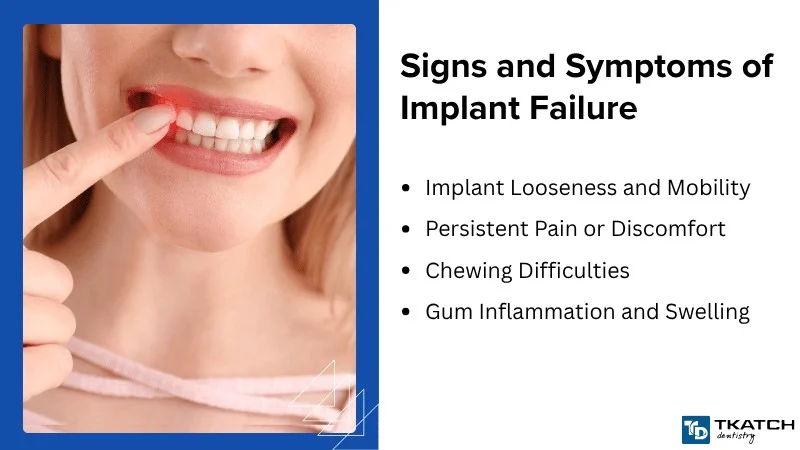
Implant Looseness and Mobility
A healthy implant should feel as stable as a natural tooth. If you notice implant looseness or implant mobility, take it seriously.
You might feel slight movement when you press on the crown with your tongue or finger. Some people describe it as a shifting or rocking feeling while chewing. These are common signs of dental implant failure.
Looseness can happen if the implant does not bond fully with your jawbone. It can also develop later from bone loss caused by infection or excess pressure, such as teeth grinding.
Do not ignore even minor implant loosening. Early treatment may save the implant. Waiting can lead to more bone damage and a fully failed dental implant that requires removal.
Persistent Pain or Discomfort
Mild soreness is normal for a few days after surgery. Pain that lasts more than a week or gets worse is not normal.
Ongoing throbbing, sharp pain when biting, or constant discomfort around the implant site are clear signs of implant failure. Pain may also spread to your jaw or ear.
Pain that continues beyond the normal healing period should prompt a call to your dentist.
You may also feel numbness or tingling if a nerve is affected. Persistent discomfort means your body is reacting to a problem. Quick care can limit damage and improve your outcome.
Chewing Difficulties
Your implant should allow you to chew without effort. If you struggle to bite or feel pressure in one spot, something may be wrong.
You may notice:
- Pain when chewing firm foods
- A feeling that your bite is uneven
- Clicking or shifting during meals
These changes often point to poor alignment or implant instability. Early dental implant failure can occur if the implant never bonds well with bone.
Chewing problems can also place extra force on nearby teeth. That added stress may cause more damage if you delay treatment.
Gum Inflammation and Swelling
Healthy gums around an implant should look pink and firm. Redness, puffiness, or bleeding when you brush are warning signs.
You might see:
- Swelling that lasts beyond a few days
- Bleeding during brushing or flossing
- Pus or bad taste near the implant
These symptoms often point to infection around the implant, known as peri-implant disease. Early stages may affect only the gums, but advanced infection can damage the bone that supports the implant.
Swelling that continues after the first few days of healing is not normal. Prompt periodontal treatment can control infection and reduce the risk of a failed dental implant.
Leading Causes of Dental Implant Failure
Dental implants have high success rates, but failure can still happen. Most problems trace back to poor healing, infection, weak bone support, or errors in placement that affect long‑term stability.
Poor Osseointegration and Bone Support
Osseointegration is the process where your jawbone fuses to the implant surface. If this bond does not form, the implant stays loose and may need removal.
Poor osseointegration is a common cause of implant failure. It often occurs within the first few months after surgery. You may notice movement, pain when chewing, or delayed healing.
Several factors raise your risk:
- Smoking
- Uncontrolled diabetes
- Certain medications that affect bone healing
- Excessive pressure on the implant too soon
A recent clinical review found that lack of osseointegration and poor primary stability were leading reasons for implant removal in failed cases.
Your dentist can lower risk by checking bone quality, choosing the right implant materials, and allowing proper healing time before placing a crown.
Peri-Implantitis and Infection
Peri-implantitis is an infection that affects the gum and bone around your implant. It causes inflammation, bleeding, and gradual bone loss.
If you ignore early signs, the bone that supports your implant can shrink. This weakens stability and may lead to failure.
Common warning signs include:
- Swollen or bleeding gums around the implant
- Bad taste or discharge
- Deep pockets around the implant
- Bone loss on X-rays
Poor oral hygiene is a major cause of implant failure related to infection. A history of gum disease also increases your risk.
You can reduce complications by brushing twice a day, cleaning under the implant crown, and keeping regular maintenance visits. Early treatment can stop bone loss and protect your implant.
Improper Implant Placement
Improper implant placement is another serious cause of implant failure. If your implant sits at the wrong angle or depth, it may not handle chewing forces correctly.
This problem can lead to:
- Uneven pressure on the implant
- Difficulty placing the final crown
- Nerve irritation
- Long-term bone stress
Surgical skill and planning matter. Dentists must study your jaw shape, nerve location, and bite before surgery.
Modern imaging, such as 3D scans, helps reduce risk. Careful planning improves alignment and supports healthy osseointegration. When placement is precise, your implant works like a natural tooth root.
Insufficient Bone Density or Support
Your implant needs strong bone to stay stable. Insufficient bone density or insufficient bone support makes it harder for the implant to anchor securely.
Bone loss can occur after tooth loss, gum disease, or long-term denture use. In these cases, your dentist may recommend a bone graft before implant placement.
Without enough support, the implant may:
- Fail to integrate with bone
- Shift under pressure
- Experience early loosening
You can improve outcomes by replacing missing teeth early and following your dentist’s plan for grafting if needed. Strong bone support gives your implant the best chance to last for many years.
Other Contributing Risk Factors
Strong bite forces, medical conditions, and rare material reactions can all raise your risk of dental implant failure. These factors often affect healing, bone support, or the stability of the implant over time.
Teeth Grinding and Excessive Pressure

If you grind or clench your teeth, you place constant stress on your implant. This habit, called bruxism, can lead to small movements that prevent the implant from bonding well with bone. That raises the risk of early implant failure.
Over time, heavy bite forces can also cause late implant failure. The crown, screw, or surrounding bone may weaken. You might notice soreness, a loose feeling, or changes in how your teeth fit together.
Common pressure-related risks include:
- Nighttime teeth grinding
- Jaw clenching during stress
- Biting hard objects like ice or pens
- Poor bite alignment
Your dentist may suggest a night guard. This clear appliance spreads pressure more evenly and protects the implant from damage.
Systemic Health and Lifestyle
Your overall health plays a direct role in healing. Conditions such as uncontrolled diabetes can slow tissue repair and increase infection risk. Infection around the implant, called peri-implantitis, is one of the main causes of dental implant failure.
Smoking also reduces blood flow to the gums. Research shows that smoking is linked to a higher risk of implant problems, including failure.
Other lifestyle and health risks include:
- Poor oral hygiene
- Skipping dental visits
- Untreated gum disease
- Autoimmune disorders
These factors can affect both early implant failure and problems that appear years later. You lower your risk when you control medical conditions and keep your mouth clean.
Allergic Reactions to Materials
Most implants use titanium. Your body usually accepts this metal well, and true allergies are rare. Still, in uncommon cases, sensitivity to certain implant materials may trigger inflammation or discomfort.
If your body reacts poorly, healing may slow down. That can interfere with bone bonding and increase the chance of implant failure.
Some implants also contain small amounts of other metals. If you have a history of metal allergies, tell your dentist before surgery. In some cases, zirconia implants offer an alternative.
A careful review of your medical history helps reduce unexpected causes of implant failure related to material sensitivity.
Effective Strategies for Preventing Implant Failure
You can prevent dental implant failure by planning carefully, keeping your mouth clean, protecting the implant from stress, and seeing your dentist on a set schedule. Each step supports healing and long-term stability.
Preoperative Planning and Assessment
You reduce risk before surgery even begins. Your dentist should review your full medical history, including diabetes, smoking, and medications that affect bone healing.
Conditions like uncontrolled diabetes and heavy smoking can raise the risk of complications. Research on factors affecting dental implant failure shows that medical conditions, smoking status, and implant type can influence outcomes.
Your dentist must also check bone quality and volume with X-rays or 3D scans. If you lack enough bone, a bone graft may be needed to create a stable base.
Implant materials and design matter too. Titanium implants remain the standard because bone bonds well to them.
Choosing the right implant size and position improves the implant success rate and lowers stress on surrounding bone.
Careful planning helps prevent implant failure before it starts.
Maintaining Oral Hygiene
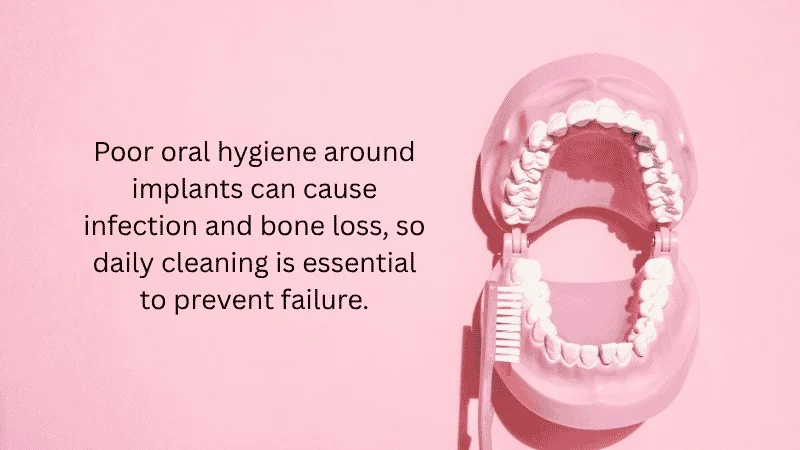
Plaque builds up around implants just like natural teeth. If you skip daily cleaning, bacteria can cause infection and bone loss.
Poor oral hygiene is a common reason for complications, as explained in this guide on dental implant failure causes and prevention tips. Infection around the implant, called peri-implantitis, can lead to bone loss and loosening.
Brush twice a day with a soft toothbrush. Clean around the implant crown and along the gumline.
You should also:
- Floss daily or use implant-safe floss
- Use interdental brushes if recommended
- Rinse with an antibacterial mouthwash if advised
Good daily care plays a direct role in preventing dental implant failure.
Protecting Implant Stability
Implants need time to bond with bone in a process called osseointegration. Too much pressure during healing can stop this bond from forming.
Early failure often happens when the implant does not fully integrate with bone. Follow your dentist’s instructions after surgery. Eat soft foods and avoid chewing on the implant side until cleared.
If you grind your teeth, ask about a night guard. Excess force from clenching can damage both the implant and surrounding bone.
Stable implants depend on controlled pressure and proper healing time.
Routine Follow-Up Care
Regular checkups allow your dentist to spot small problems early. Many serious failures begin with mild inflammation that patients do not notice.
Patients who skip maintenance visits face higher risk of complications. A clinical guide to dental implant failure prevention notes that consistent follow-up reduces implant issues over time.
During these visits, your dentist will:
- Check gum health
- Measure bone levels with X-rays
- Tighten or adjust components if needed
- Clean hard-to-reach areas
You should usually schedule visits every 3 to 6 months, depending on your risk factors.
Routine care supports long-term implant success rate and helps prevent implant failure before it becomes serious.
What to Do If You Suspect Implant Complications
Act quickly if you notice pain, swelling, movement, or other changes around your implant. Early care can stop minor problems from turning into a failed dental implant.
Steps to Take Immediately
If you feel persistent pain, swelling, bleeding, or looseness, stop chewing on that side of your mouth. Avoid hard, crunchy, or sticky foods that put pressure on the implant.
Do not test the implant by pushing it with your tongue or fingers. Movement can disrupt healing, especially during the early bonding stage when the implant fuses with your jawbone.
Keep the area clean. Brush gently and floss carefully around the implant to reduce bacteria. If your dentist prescribed a mouth rinse, use it as directed.
Watch for warning signs such as:
- Ongoing numbness in your lip, chin, or gums
- Pus or a bad taste in your mouth
- Fever or facial swelling
- Sinus pressure after upper jaw implants
These symptoms may point to dental implant failure or infection and need prompt care.
Consulting Your Dental Professional
Call your dentist or oral surgeon as soon as symptoms last more than a few days. Do not wait for the problem to improve on its own.
Your provider will examine the implant and may take X-rays to check the bone around it. Bone loss, infection, or poor bonding to the jaw can all lead to implant failure.
Infections such as peri-implantitis can damage the bone that supports your implant.
Be clear about what you feel. Tell your dentist when the pain started, whether it is getting worse, and if the implant feels loose. This helps them decide the next step.
Treatment Options for Failed Implants
Treatment depends on the cause of the failed dental implant.
If infection is mild, your dentist may clean the area and prescribe antibiotics. Deep infections that affect the bone may require removal of damaged tissue.
If the implant did not fuse with the jawbone, your surgeon may remove it and allow the area to heal. In some cases, they can place a new implant after healing.
When bone loss caused the problem, you may need a bone graft before trying again. This rebuilds support so the next implant has a better chance of success.
You can review possible solutions in this overview of what to do if your dental implant fails.
If nerve or sinus issues caused the complication, your provider may adjust or remove the implant to relieve symptoms. Early treatment protects your bone, gums, and long-term oral health.
Frequently Asked Questions
Dental implants can fail for clear medical and lifestyle reasons. You can lower your risk by knowing what causes problems, spotting early warning signs, and acting fast if something feels wrong.
What are the most common reasons a dental implant might not succeed?
The most common causes include infection around the implant, not enough healthy jawbone, and poor healing after surgery. Active gum disease also raises your risk.
Smoking and certain health conditions can slow healing. The common causes of dental implant failure include infection and lack of bone support.
Poor placement by an inexperienced surgeon can also lead to stress on the implant. Over time, that stress can loosen it.
What early warning signs should I watch for after getting a dental implant?
Some discomfort is normal for a few days. Pain that lasts more than a week or gets worse needs attention.
Watch for swelling, gum redness, bleeding, or pus near the implant. You may also notice the implant feels loose or hurts when you chew.
Numbness or tingling in your lips or tongue can mean nerve irritation. Call your dentist right away if that happens.
What is the biggest risk factor that increases the chance of implant problems?
Smoking stands out as one of the biggest risk factors. It reduces blood flow to your gums and slows healing.
Untreated gum disease also puts you at high risk. Healthy gums and bone are required before surgery.
If you have diabetes that is not well controlled, your body may heal more slowly. That can affect how well the implant bonds with your jawbone.
How much does smoking affect the success rate of dental implants?
Smoking can nearly double your risk of implant failure. Research shows smokers may have failure rates up to 20 percent.
This happens because smoking limits blood flow and slows bone healing. You can improve your outcome if you stop before surgery and avoid smoking during healing. Even cutting back helps, but quitting gives you the best chance of success.
What can happen if an implant fails years later, like after 10 years?
Late failure often links to bone loss or long-term gum infection around the implant. You may notice gum recession or the implant feeling loose. In some cases, the implant can affect nearby tissue or loosen after years of pressure.
Your dentist may need to remove the implant. After healing, you might qualify for a new one.
If an implant fails, what are my options for replacement and who covers the cost?
Your dentist will first remove the failed implant and clean the area. If you lost bone, you may need a bone graft before placing a new implant.
Some patients switch to a dental bridge or partial denture instead. The right choice depends on your bone level and overall health.
Dental insurance often covers part of the repair or replacement, but many plans limit implant coverage. You should check your policy and ask your dental office for a written estimate before moving forward.