


Nobody wants to hear they need to have a tooth pulled. But sometimes tooth extraction becomes necessary to protect your oral health and prevent more serious problems down the road.
Tooth extraction is typically the only option when a tooth is too damaged by decay, infection, or trauma to be saved through fillings, root canals, or crowns, or when advanced gum disease has destroyed the supporting bone structure.
Dentists always try to save your natural teeth first. They only recommend removal when other treatments won’t work or when keeping the tooth puts your health at risk.
Understanding when tooth extraction is necessary helps you make informed decisions about your dental care.
This guide walks you through the specific situations where removal becomes unavoidable, what alternatives might be available, and what to expect during recovery.
Key Takeaways
- Extraction is recommended only when decay, infection, or gum disease has damaged a tooth beyond repair
- Dentists explore all treatment alternatives before deciding that removal is necessary
- After extraction, replacement options like implants or bridges can restore your smile and oral health
Scenarios Where Saving the Tooth Is Not Possible
Some dental problems become so severe that no treatment can repair the damage. When decay reaches deep into the tooth or a fracture extends below the gum line, extraction becomes the only way to protect your overall oral health.
Extensive Structural Damage
When a large portion of your tooth breaks or crumbles away, there may not be enough remaining tooth structure to support a filling or crown. Trauma from accidents or sports injuries can shatter teeth into multiple pieces, making repair impossible.
A cracked tooth that extends vertically through the root cannot be fixed with current dental techniques. The crack allows bacteria to enter and prevents the tooth from functioning properly.
Even if your dentist places a restoration, the tooth will continue to split apart under normal chewing pressure.
Teeth fractured below the gum line typically cannot support any type of dental work. The damaged area sits too deep for proper restoration, and attempting to save such teeth often leads to ongoing pain and infection.
Non-Restorable Tooth Decay
Severe tooth decay that destroys most of the tooth’s natural structure leaves nothing for a dentist to work with. When cavities eat through the enamel, dentin, and into the pulp chamber, the tooth loses its ability to maintain strength and function.
Advanced decay that spreads throughout multiple surfaces makes filling impossible. Your tooth needs a certain amount of healthy structure to hold restorative materials in place. Without this foundation, any dental work will simply fall out or fail.
Tooth decay that reaches the root and surrounding bone creates infections that threaten your health. These deep infections don’t respond well to root canal treatment because too much damage has already occurred.
Removing the tooth stops the infection from spreading to other areas of your mouth.
Irreparable Root Fractures
A root fracture occurs deep beneath your gums where you cannot see it. These breaks often happen from grinding your teeth, biting down on hard objects, or experiencing facial trauma.
Unlike crown fractures, root damage cannot be repaired with standard dental procedures.
Vertical root fractures run from the root tip toward the chewing surface. They create pathways for bacteria to enter the tooth and bone, causing persistent infections and abscesses.
No filling material or bonding agent can seal these cracks effectively.
Horizontal fractures near the root tip also make teeth unsavable in most cases. The separated root portion loses its blood supply and dies, while the remaining fragment becomes too unstable to support the crown.
When infection spreads to the root and surrounding bone, extraction protects your jaw from further damage.
Failed Restorative Treatments
Sometimes previous dental work breaks down beyond repair. A tooth that has undergone multiple root canals, crowns, or large fillings may have too little natural structure left to support another restoration.
When tooth structure is too damaged to support a restoration, your dentist cannot place new dental work safely. The remaining walls become too thin and weak to withstand chewing forces.
Attempting another repair would likely result in the tooth splitting or crumbling within months.
Recurring decay around old fillings indicates that the tooth cannot maintain a proper seal. Bacteria continue finding ways into the tooth despite your dentist’s best efforts. After several failed attempts to save the tooth, extraction becomes the most practical solution to end the cycle of infection and repair.
Infections and Complications Requiring Removal
Some dental infections become so severe that extraction is the safest way to protect your overall health. When bacteria spread beyond the tooth or when standard treatments fail, removal may be your only viable option.
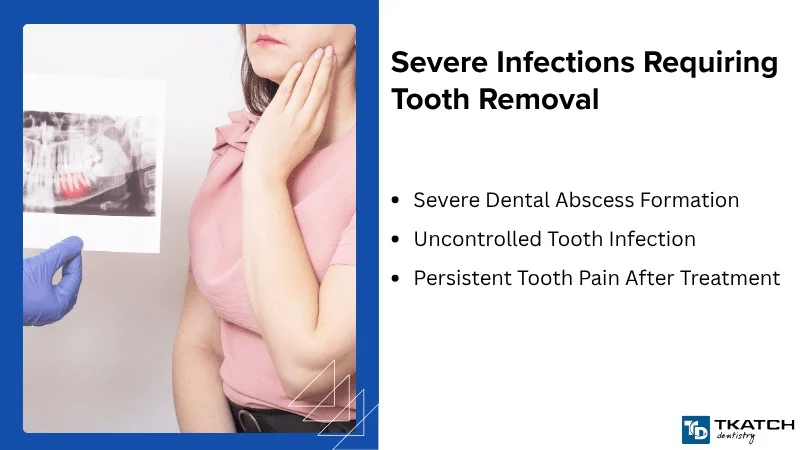
Severe Dental Abscess Formation
A dental abscess forms when bacteria create a pocket of pus in or around your tooth. This happens when an infection spreads to the root tip or surrounding gum tissue.
You might notice swelling in your face, jaw, or neck along with intense throbbing pain.
Bacterial invasion at the extraction site shows how aggressive oral infections can be. When an abscess grows large or spreads to nearby tissues, it can become life-threatening.
The infection may enter your bloodstream or spread to other parts of your head and neck.
Your dentist will typically try to save the tooth first through drainage and antibiotics. However, if the abscess keeps returning or the tooth structure is too damaged, extraction becomes necessary.
This is especially true when the infection affects the bone around your tooth or creates multiple abscesses.
Uncontrolled Tooth Infection
Sometimes a tooth infection doesn’t respond to antibiotics or other treatments. You might have tried multiple rounds of medication, but the infection persists or worsens.
This situation requires immediate attention because infections can spread and create other complications.
Root canal therapy is often the first choice for infected teeth. Endodontic therapy removes the infected pulp inside your tooth and seals it to prevent future problems.
But root canal therapy doesn’t always work, especially if the infection has severely damaged the tooth or surrounding bone.
When root canal treatment fails or isn’t possible, extraction protects you from serious health risks. An uncontrolled infection can lead to sepsis, which is a dangerous whole-body response to infection.
Persistent Tooth Pain After Treatment
You might experience ongoing pain even after receiving root canal therapy or other treatments. This persistent tooth pain often signals that the initial treatment didn’t fully resolve the problem.
The tooth may have hidden cracks, extra root canals that weren’t treated, or reinfection.
Dental trauma can also cause long-term problems that don’t heal properly. A fractured root or severe crack may not show up immediately but leads to chronic pain and infection over time.
Your dentist may recommend retreatment first, but extraction becomes necessary when the tooth structure is too compromised.
Pain that interferes with eating, sleeping, or daily activities shouldn’t be ignored. If your discomfort continues despite proper treatment, removing the tooth may be the most effective way to eliminate your pain and prevent future problems.
Advanced Gum Disease and Tooth Support Loss
Periodontal disease destroys the bone and tissue that hold your teeth in place, and when this damage becomes too severe, extraction may be your only option.
The extent of bone loss and your tooth’s stability determine whether periodontal treatments can save the tooth or if removal is necessary.
Periodontal Disease Impact
Periodontitis attacks the supporting structures around your teeth over time. The infection starts in your gums and spreads down to the bone that anchors your teeth in your jaw.
As the disease progresses, it creates pockets between your teeth and gums where bacteria collect. These pockets grow deeper as more tissue and bone break down. Your teeth gradually lose their foundation.
Advanced gum disease is one of the leading causes of tooth loss in adults. The bacteria don’t just affect one tooth either. They can spread to neighboring teeth and cause widespread damage throughout your mouth if left untreated.
Bone Loss and Tooth Mobility
When periodontal disease causes significant bone loss, your teeth start to feel loose or shift position. The bone that once held them firmly in place has deteriorated.
Dentists typically consider teeth with 50% or greater bone loss to have a poor prognosis. However, the location and pattern of bone loss matter just as much as the percentage.
You might notice these signs of advanced bone loss:
- Teeth that wiggle when you touch them
- Changes in how your teeth fit together when you bite
- Gaps appearing between teeth that were once close together
- Teeth that appear longer because gums have receded
Severe periodontal disease can cause bone and tissue deterioration that makes teeth unstable. Even a tooth with no cavities may need removal if it lacks proper support.
When Periodontal Treatment Is Not Effective
Most cases of gum disease respond well to treatment when caught early. Deep cleanings, antibiotics, and regular maintenance can stop the disease from getting worse.
But sometimes the damage is too extensive for standard treatments to work. Extraction becomes necessary when bone and tissue have been destroyed beyond repair.
Your dentist will take X-rays and measure the bone loss around your tooth. They’ll check if the tooth can be stabilized or if keeping it would harm the surrounding teeth.
Removing a tooth promptly can actually prevent further deterioration and preserve your jawbone health.
The decision isn’t made lightly. Your dentist will consider whether advanced treatments like bone grafts could help, but these options have limits when bone loss is severe.
Impacted and Overcrowded Teeth Considerations
When teeth don’t have enough room to grow properly or can’t break through the gum line, extraction often becomes the most practical solution.
These situations involve either teeth stuck beneath the gums or too many teeth competing for limited space in your jaw.
Impacted Wisdom Teeth
Impacted teeth occur when a tooth fails to erupt fully within its expected developmental time.
Your wisdom teeth, also called third molars, are the most common teeth to become impacted because they’re the last to come in and often lack sufficient space.
When wisdom teeth are impacted, they can grow at odd angles or remain trapped beneath your gum tissue. This creates several problems for your oral health.
You might develop infections around the partially erupted tooth, or the impacted tooth could damage neighboring teeth by pushing against them.
Surgical extractions may involve sectioning the tooth into smaller pieces for easier removal, especially when the tooth is deeply embedded in your jawbone.
Your dentist uses dental X-rays to locate impacted teeth and determine the best approach for removal.
Orthodontic Overcrowding Solutions
Sometimes your jaw is simply not large enough to accommodate the size of your permanent teeth. When teeth crowd each other, they shift into unusual positions or overlap.
Removing one or more teeth creates the space needed for proper alignment during orthodontic treatment. Your orthodontist carefully plans which teeth to extract based on your specific situation.
This decision depends on factors like jaw size, tooth position, and your overall treatment goals.
Dental overcrowding can cause various oral health issues and aesthetic concerns beyond just appearance. Crowded teeth are harder to clean properly, which increases your risk of cavities and gum disease.
Third Molars and Extraction Decisions
Third molars don’t always need removal. Your dentist evaluates several factors before recommending extraction of these teeth.
Key factors include:
- Available space in your jaw
- The angle of tooth growth
- Risk of infection or decay
- Impact on adjacent teeth
- Your age and overall health
When there is not enough space available, a tooth will grow beyond or on top of a neighboring tooth. An infection may develop if the impacted tooth remains in the gum or emerges next to another tooth.
Not all third molars cause problems. Some people have enough jaw space for these teeth to erupt normally and function properly.
Your dentist monitors these teeth over time to determine if extraction becomes necessary based on changes in your oral health.
Exploring Alternatives to Tooth Extraction
Modern dentistry provides several ways to save your natural teeth when you’re facing dental problems.
Root canal therapy can treat infected tooth pulp, while crowns and fillings restore damaged teeth, and periodontal treatments address gum disease that threatens tooth stability.
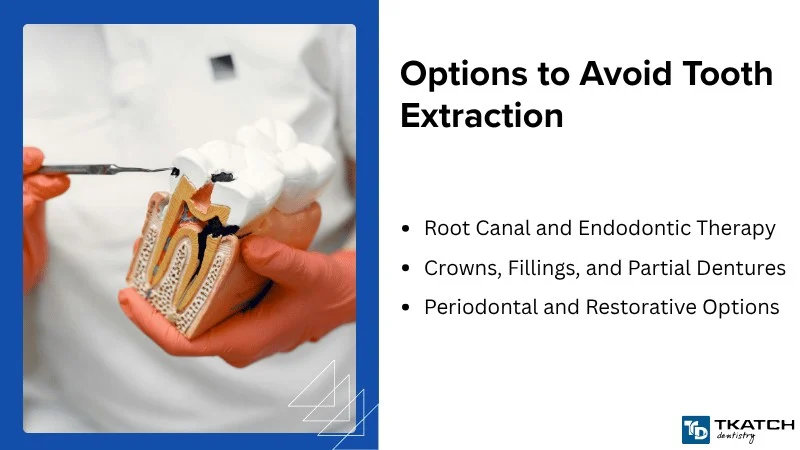
Root Canal and Endodontic Therapy
When decay or infection reaches the inner pulp of your tooth, root canal therapy may allow you to avoid extraction.
During this procedure, your dentist removes the infected pulp, cleans the inside of the tooth, and seals it to prevent further infection.
Endodontic therapy treats the soft tissue inside your tooth while keeping the outer structure intact. This means you keep your natural tooth and avoid the complications that come with missing teeth.
Root canal treatment has a high success rate and can last many years with proper care. After the procedure, your tooth typically needs a crown to protect it and restore full function.
Many people worry that root canals are painful, but modern techniques and anesthesia make the process similar to getting a filling.
Crowns, Fillings, and Partial Dentures
Dental crowns cover and protect teeth that are cracked, severely worn, or weakened by large cavities. Your dentist shapes the tooth and places a custom-made cap over it that looks and functions like a natural tooth.
Fillings work well for smaller areas of decay. Your dentist removes the damaged portion and fills the space with composite resin, amalgam, or other materials. This restores the tooth’s shape and prevents the decay from spreading.
Partial dentures can replace multiple missing teeth without extracting additional healthy teeth. These removable appliances attach to your remaining teeth and fill the gaps in your smile.
They help you chew properly and maintain your facial structure while preserving the teeth you still have.
Periodontal and Restorative Options
Periodontal treatment addresses gum disease that causes teeth to loosen and may seem to require extraction. Deep cleaning procedures like scaling and root planing remove bacteria and tartar below the gum line.
This allows your gums to heal and reattach to your teeth.
Advanced periodontal therapies include bone grafts and gum grafts that restore lost tissue. These procedures can stabilize loose teeth and eliminate the need for removal.
Good oral hygiene plays a crucial role in saving your teeth. Brushing twice daily, flossing, and regular dental visits help prevent problems from getting worse. Your dentist might also recommend antibiotics or special mouth rinses to control infection. Preserving your natural tooth maintains proper alignment and supports a healthy bite, which benefits your overall oral health for years to come.
What Happens After Extraction: Your Next Steps
The days and weeks following your tooth extraction require proper care to ensure healing, and you’ll need to consider replacement options to maintain your oral health and prevent future dental problems.
Healing and Recovery Process
Your body begins forming a blood clot in the empty socket immediately after tooth extraction, and protecting this clot is the most important part of your recovery.
You should expect some bleeding within the first 12 to 24 hours, which you can control by pressing clean gauze against the area for 20 minutes.
Avoid these activities during the first few days:
- Using straws or spitting
- Rinsing your mouth vigorously
- Smoking or using tobacco products
- Touching the extraction site with your tongue or fingers
You’ll likely need to rest for at least 24 hours after the procedure. Most people cannot return to work for up to three days following tooth extractions.
Pain and swelling are normal, and you can manage them with over-the-counter pain relievers and ice packs applied for 15 minutes at a time.
After 24 hours, gentle saltwater rinses can help keep the area clean. Stick to soft foods like yogurt, applesauce, and soup during the first week while avoiding the extraction site when brushing your teeth.
Dental Implants and Fixed Bridges

Once your extraction site heals, you’ll need to decide how to replace the missing tooth. Dental implants are a popular permanent solution that involves placing a titanium post into your jawbone, which then supports a replacement tooth.
This option helps preserve your jawbone and functions just like a natural tooth.
A fixed bridge is another common choice that uses the teeth on either side of the gap to support an artificial tooth.
Your dentist cements the bridge in place, and you care for it just like your natural teeth. Bridges typically last 5 to 15 years with proper maintenance.
The timing for these replacement options depends on your healing progress. Dental implants usually require several months of bone healing before placement, while bridges can often be placed sooner.
Considering Long-Term Oral Health
Leaving a gap after tooth extraction can create serious problems for your oral health over time. Your remaining teeth may shift into the empty space, causing bite problems and making it harder to clean between teeth properly.
Your jawbone also needs stimulation from tooth roots to maintain its density. Without replacement, the bone in the extraction area gradually deteriorates, which can change your facial structure and make future dental work more complicated.
Replacing your extracted tooth protects the health of your surrounding teeth and gums.
The investment in a dental implant or fixed bridge now prevents more expensive treatments later and helps you maintain proper chewing function and a confident smile.
Frequently Asked Questions
Deciding whether to extract a tooth involves understanding the specific conditions that make removal necessary and what happens afterward.
These common questions address the key factors that determine when extraction becomes the right choice.
What signs indicate a tooth can’t be saved and needs to be removed?
Severe pain that doesn’t go away with treatment is often the first warning sign. You might also notice visible damage like large cracks or pieces of the tooth breaking off.
Swelling around the tooth or in your gums can indicate a serious infection. If the tooth feels loose or wiggles when you touch it, the supporting structures may be too damaged to keep it in place.
Persistent bad taste or drainage near a tooth suggests an abscess that hasn’t responded to other treatments. Your dentist will take X-rays to see damage below the gumline that you can’t see yourself.
How do dentists decide between a root canal and pulling a tooth?
Your dentist looks at how much of the tooth structure remains intact. A root canal works when there’s enough healthy tooth left to support a crown after removing the infected pulp.
The location and extent of decay matter too. If decay has spread too far below the gumline or into the roots, a root canal won’t provide a stable, long-term solution.
The cost and your overall health also play a role in the decision. Some patients prefer extraction with a replacement option over multiple appointments for root canal therapy.
When is a severely broken or cracked tooth considered beyond repair?
Fractures that extend below the gumline usually can’t be fixed with crowns or bonding. The crack exposes parts of the tooth that dentists can’t properly seal or restore.
Vertical cracks that split the tooth from top to bottom through the root are typically unrepairable. These allow bacteria to enter and make the tooth unstable.
Large cracks or fractures that expose the tooth’s pulp may be impossible to restore with fillings or crowns. If the damage from trauma affects the root structure deep in the bone, extraction often becomes necessary.
Can advanced gum disease make tooth removal necessary?
Yes, periodontal disease is actually the leading cause of tooth loss in adults. Nearly 47% of adults aged 30 and older have some form of gum disease.
When gum disease progresses, it destroys the bone that holds your teeth in place. The tooth becomes loose as the supporting tissue breaks down.
Advanced cases create deep pockets between your gums and teeth that harbor bacteria. Even with treatment, severely affected teeth may not regain enough stability to function properly.
Is extraction ever the best choice for an infected tooth?
Sometimes an infection spreads so deeply into the root and surrounding bone that antibiotics and root canals can’t eliminate it completely. Removing the tooth stops the infection from damaging nearby teeth and bone.
An abscess that keeps coming back despite treatment indicates the tooth can’t recover. Leaving a chronically infected tooth in your mouth puts your overall health at risk.
When root canal therapy is not possible, extraction helps eliminate the infection and prevent further damage. Some teeth have unusual root shapes or blockages that make them impossible to treat effectively.
What options are available to replace a tooth after it’s removed?
Dental implants offer the most durable and natural-looking replacement option. The implant post fuses with your jawbone and supports a custom crown that functions like a real tooth.
Dental implants not only restore your smile but also preserve jawbone health and maintain proper bite alignment. They don’t require altering neighboring teeth like bridges do.
Bridges attach to the teeth on either side of the gap and can replace one or more missing teeth. Partial dentures are removable appliances that work well when you’re missing several teeth in different areas.
Your dentist will discuss which replacement option fits your budget, oral health, and lifestyle needs. Acting quickly to replace extracted teeth prevents your other teeth from shifting out of position.