Gum disease affects millions of people and can sneak up on you without obvious symptoms in the early stages. Many people don’t realize they have a problem until the condition has progressed to a more serious level.
Advanced gum disease, also known as periodontitis, shows warning signs like loose teeth, gums pulling away from teeth, persistent bad breath, pus between teeth and gums, and changes in how your teeth fit together when you bite.
Understanding these advanced gum disease symptoms can help you catch problems before they cause permanent damage to your teeth and bone.
Advanced gum disease is more than just bleeding gums. It can lead to tooth loss and affect the structures that keep your teeth in place.
Your oral health connects to your overall well-being in important ways. Learning to spot the symptoms of advanced periodontal disease gives you the power to seek treatment early and protect your smile for years to come.
Key Takeaways
- Advanced gum disease causes loose teeth, receding gums, bad breath, and pus between teeth and gums
- The condition progresses from mild gingivitis to severe periodontitis that destroys bone and tissue
- Early cleaning and prevention can protect your long-term oral health
Table of Content
- Recognizing the Key Symptoms of Advanced Gum Disease
- How Gum Disease Progresses: From Gingivitis to Advanced Periodontitis
- Complications and Risks of Untreated Gum Disease
- Diagnosis: How Dentists Detect Advanced Gum Disease
- Treatment Options for Advanced Gum Disease
- Tips for Prevention and Maintaining Gum Health
- Frequently Asked Questions
Recognizing the Key Symptoms of Advanced Gum Disease
Advanced periodontitis produces clear physical changes in your mouth that differ from early gum disease symptoms. These warning signs of gum disease often appear gradually but become more severe as the infection progresses.
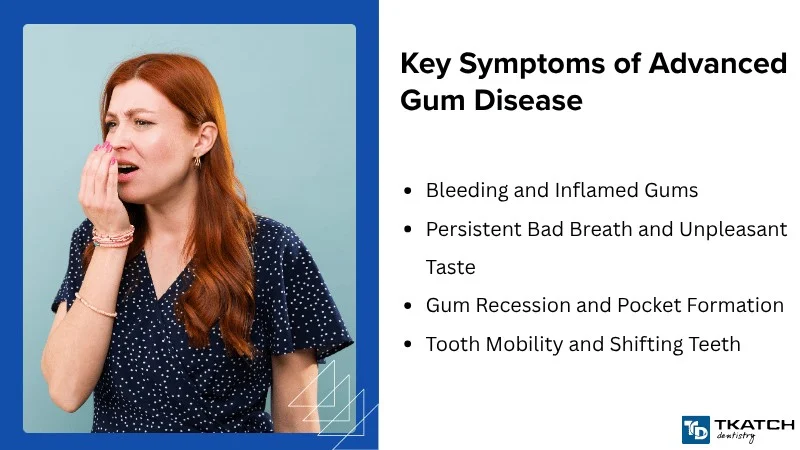
Bleeding and Inflamed Gums
Your gums shouldn’t bleed during normal activities like brushing or eating. Bleeding gums are a common warning sign that signals inflammation and infection in your gum tissue.
In advanced gum disease, you might notice:
- Bleeding during routine activities like flossing, brushing, or biting into firm foods
- Dark red or purple gums instead of healthy pink tissue
- Swollen or puffy gums that feel tender when you touch them
- Blood on your toothbrush or when you spit after brushing
The inflammation happens because bacteria in deep gum pockets trigger your body’s immune response. Your gums may feel sore or painful, especially when you apply pressure while cleaning your teeth.
Persistent Bad Breath and Unpleasant Taste
Chronic bad breath that doesn’t go away after brushing points to a deeper problem than food particles. Halitosis from advanced periodontitis comes from bacteria breaking down tissue in your gum pockets.
You might experience a constant unpleasant taste in your mouth, even right after using mouthwash. This metallic or bitter taste often accompanies persistent bad breath.
The bacteria in periodontal pockets release sulfur compounds that create this smell. Regular oral hygiene won’t eliminate the odor because the bacteria live below your gumline where your toothbrush can’t reach.
If people step back when you talk or you notice the bad breath yourself throughout the day, it’s time to see your dentist.
Gum Recession and Pocket Formation
Receding gums pull away from your teeth, making your teeth look longer than they used to. This happens as advanced gum disease destroys the tissue that holds your gums in place.
Signs of gum recession include:
- Teeth that appear noticeably longer
- Exposed tooth roots that feel sensitive to hot or cold
- Dark spaces between your teeth that look like black triangles
- Deep pockets between your gums and teeth
Periodontal pockets deeper than 4-5 millimeters indicate advanced disease. In severe cases, these pockets can exceed 7 millimeters, creating spaces where bacteria thrive and continue damaging bone and tissue.
Your dentist measures these pockets during exams to track disease progression.
Tooth Mobility and Shifting Teeth
Loose teeth signal that periodontitis has destroyed significant bone and tissue supporting your teeth. You might feel your teeth move when you push on them with your tongue or notice they wiggle when you chew.
Advanced gum infection causes several changes to tooth position. Your teeth may drift apart, creating new gaps where none existed before.
Some teeth might shift forward or rotate, changing how your bite feels when you close your mouth.
Pain when chewing often accompanies tooth mobility because your teeth lack stable support. You might avoid certain foods because chewing feels uncomfortable or causes your teeth to hurt.
Without treatment, the bone loss continues until affected teeth become so loose they fall out or require extraction.
How Gum Disease Progresses: From Gingivitis to Advanced Periodontitis
Gum disease moves through clear stages, starting with reversible gingivitis and advancing to bone-destroying periodontitis. Understanding how plaque and tartar drive this progression helps you recognize when to seek treatment.
Stages of Gum Disease
Gum disease progresses through four main stages: gingivitis, early periodontitis, moderate periodontitis, and advanced periodontitis. Each stage brings more damage to your gums, teeth, and supporting bone.
Gingivitis is the first stage. Your gums become red, swollen, and bleed easily when you brush or floss. The good news is that gingivitis is reversible with professional cleaning and better oral hygiene at home.
If you don’t treat gingivitis, it advances to early periodontitis. At this point, the bacterial infection starts breaking down the bone that holds your teeth in place. Small pockets form between your gums and teeth.
Moderate periodontitis deepens these pockets further. You may notice your gums pulling away from your teeth, making them look longer. Bone loss continues.
Advanced periodontitis is the final stage. Your teeth may become loose or fall out. The pockets between your gums and teeth can fill with pus, and you might experience persistent bad breath.
Progression From Plaque to Tartar
Plaque buildup is the main cause of periodontal disease. This sticky film of oral bacteria forms on your teeth constantly throughout the day.
When you don’t remove plaque through brushing and flossing, it hardens into tartar within 24 to 72 hours. Unlike plaque, you can’t remove tartar with your toothbrush at home.
Only a dentist or hygienist can clean it off during dental check-ups.
The bacteria in plaque and tartar release toxins that irritate your gums. This triggers inflammation and starts the cycle of gum disease. The longer plaque and tartar stay on your teeth, the more damage they cause to your gum tissue and bone.
Early and Moderate Periodontitis
Once gingivitis advances to early periodontitis, the damage becomes permanent. The infection spreads below your gum line, and your body’s inflammatory response starts destroying the tissues and bone supporting your teeth.
Pockets between your teeth and gums measure 4 to 5 millimeters deep in early periodontitis. These pockets trap more bacteria, making the infection worse.
In moderate periodontitis, pockets deepen to 6 to 7 millimeters. You lose more bone, and your teeth may start feeling loose.
When you’ve lost bone around your teeth due to infection, the disease is too advanced to reverse, but you can manage it with treatment.
Regular dental check-ups become critical at these stages. Your dentist needs to monitor pocket depths and bone loss to prevent progression to advanced periodontitis.

Complications and Risks of Untreated Gum Disease
Advanced gum disease creates serious problems that extend beyond your mouth. The infection destroys the structures supporting your teeth and can affect your entire body’s health.
Gum and Bone Loss
When gum disease goes untreated, the infection creates deep pockets between your gums and teeth. These pockets fill with bacteria that attack the soft tissue and bone holding your teeth in place.
The bone loss happens gradually but can become severe. Your gums start to pull away from your teeth, making them look longer than normal. This process is called gum recession, and it exposes the sensitive roots of your teeth.
Without proper periodontal treatment, the damage to your gums and bone keeps getting worse. The bone that anchors your teeth breaks down over time.
In some cases, dentists can use bone grafting procedures to rebuild lost bone and support tissue regeneration.
Your gum health depends on stopping the infection before it destroys too much tissue. Once bone loss occurs, it cannot grow back on its own. Bone grafts can help restore some of the lost structure, but preventing the damage in the first place is always better.
Tooth Loss and Extraction
Advanced periodontitis causes tooth loss when the supporting bone and tissue become too damaged. Your teeth may start to feel loose when you touch them with your tongue or finger.
Loose teeth often cannot be saved, even with treatment. A dentist may recommend tooth extraction if the tooth has lost too much support. Multiple teeth can be affected at the same time if the disease spreads throughout your mouth.
Losing teeth affects how you eat, speak, and smile. It also causes the remaining teeth to shift position, creating gaps and changing your bite. Replacing lost teeth requires additional procedures like implants, bridges, or dentures.
Impact on Overall Health
The bacteria from gum disease can enter your bloodstream through inflamed gum tissue. This can affect other parts of your body and increase your risk of serious health problems.
Research shows links between periodontal disease and heart disease, diabetes complications, and respiratory problems. The ongoing inflammation in your mouth puts strain on your immune system.
Pregnant women with gum disease face higher risks of preterm birth and low birth weight babies. People with diabetes may find it harder to control their blood sugar levels when they have untreated gum infections.
Your oral health connects directly to your overall well-being. Taking care of your gums protects more than just your teeth and healthy gums.
Diagnosis: How Dentists Detect Advanced Gum Disease
Dentists use several tools and techniques to find advanced gum disease, including measuring pocket depths around your teeth, taking X-rays to check bone loss, and doing visual exams of your gums.
These methods help your dentist see how far the disease has progressed and create the right treatment plan for you.
Periodontal Probing and Charting
Your dentist uses a small tool called a periodontal probe to measure the depth of the spaces between your teeth and gums. These spaces are called periodontal pockets.
Healthy gums have pockets that measure 1 to 3 millimeters deep. Pockets measuring 4 millimeters or deeper signal gum disease. When pockets reach 5 millimeters or more, you likely have advanced gum disease.
During your dental check-up, your dentist will measure these pockets at six points around each tooth. They record these numbers on a chart to track changes over time.
The probe also helps them find areas where your gums bleed easily, which is another warning sign.
What the measurements mean:
- 1-3 mm: Healthy gums
- 4 mm: Early gum disease
- 5-6 mm: Moderate gum disease
- 7+ mm: Advanced gum disease
X-Rays and Clinical Exams
X-rays show your dentist what’s happening below your gum line where they can’t see with their eyes alone. These images reveal bone loss around your teeth, which is a key sign of advanced gum disease.
During a clinical exam, your dentist looks for red, swollen, or bleeding gums. They check if your teeth feel loose or if they’ve shifted position. Your dentist will also ask about symptoms like bad breath or pus between your teeth and gums.
The combination of X-rays and visual exams gives your dentist a complete picture of your gum health. This helps them decide if you need treatments like scaling and root planing or other deep cleaning procedures.
When to See a Periodontist
Your regular dentist might refer you to a periodontist if your gum disease is advanced. A periodontist is a specialist who focuses on treating gum disease and the supporting structures of your teeth.
You should see a periodontist if you have deep periodontal pockets that don’t respond to regular dental cleanings. They have special training and tools to treat severe cases.
Your periodontist can perform deep cleaning procedures and other treatments that go beyond what happens during routine dental check-ups.
Most people benefit from seeing a periodontist when their pocket depths measure 5 millimeters or deeper, or when they’ve lost bone around their teeth.
Treatment Options for Advanced Gum Disease
Advanced gum disease requires professional intervention through deep cleaning procedures or surgery, combined with improved daily oral care habits. Your dentist will recommend the best approach based on how far the disease has progressed.
Professional Deep Cleaning
Deep cleaning goes beyond regular dental cleanings to treat infected areas below your gum line. This treatment involves scaling and root planing, a two-part process that removes plaque and tartar from tooth surfaces and roots.
During scaling, your dentist removes buildup from above and below the gum line. Root planing smooths the tooth roots to help your gums reattach to your teeth.
The procedure usually requires dental sedation, such as local anesthesia, to keep you comfortable.
Periodontal treatment often includes antibiotics to fight infection. Your dentist may prescribe antibacterial mouthwash or place antibiotic gel directly into gum pockets.
Some cases need multiple deep cleaning sessions to fully address the infection.
Surgical Treatments and Grafting
When deep cleaning isn’t enough, surgical options become necessary. Flap surgery lifts your gums back to remove tartar deposits deep under the gum line, then stitches the tissue back into place.
Common surgical procedures include:
- Gum graft – replaces lost gum tissue using tissue from your mouth’s roof
- Bone grafting – rebuilds bone destroyed by infection
- Tissue regeneration – uses special materials to encourage bone and tissue regrowth
These treatment options for advanced gum disease help restore support for your teeth. While bone loss from gum disease cannot be reversed completely, these procedures can prevent further damage and stabilize your oral health.
Managing Gum Disease at Home
Your daily habits play a vital role in controlling gum disease progression. Brush twice a day using a soft-bristled toothbrush and fluoride toothpaste. Spend at least two minutes each time you brush.
Floss daily to remove plaque between teeth where your toothbrush can’t reach. Use antiseptic mouthwash to kill bacteria that cause infection. Your dentist may recommend a specific antibacterial mouthwash for your condition.
Good oral hygiene practices support professional treatments and prevent disease from returning. Regular dental checkups let your dentist monitor your progress and catch problems early.
Brushing and flossing properly every day gives you the best chance of keeping your gums healthy long-term.
Tips for Prevention and Maintaining Gum Health
Preventing gum disease requires consistent daily care combined with professional periodontal treatment and smart lifestyle choices.
By focusing on proper oral hygiene, regular checkups, and healthy habits, you can maintain healthy gums and avoid serious complications.
Daily Oral Hygiene Habits
Your daily routine is the foundation for preventing gum disease. You should brush twice a day with fluoride toothpaste, spending at least two minutes each time.
Make sure to angle your brush at 45 degrees toward your gumline to remove plaque buildup effectively.
Flossing daily is just as important as brushing. It removes plaque from between your teeth where your toothbrush can’t reach. If traditional floss is difficult to use, try interdental brushes, wooden picks, or water flossers.
Key daily habits include:
- Brush twice daily for two minutes each session
- Floss at least once per day
- Use an antimicrobial mouthwash to reduce bacteria
- Replace your toothbrush every three to four months
The goal is to prevent plaque from hardening into tartar, which only a dentist can remove.
The Role of Regular Dental Visits

You need professional cleanings and checkups to maintain healthy gums. During these visits, your dentist removes tartar buildup that brushing and flossing miss. They also check for early warning signs of gum problems.
Most people should visit their dentist every six months. Your dentist will measure the pockets around your teeth using a small probe.
In a healthy mouth, these pockets measure between 1 and 3 millimeters. Deeper pockets may signal gum disease that needs treatment.
These dental check-ups catch problems early when they’re easier to treat. Your dental hygienist can also show you better brushing and flossing techniques tailored to your needs.
Lifestyle Factors and Diet
Your daily choices directly impact your oral health. Smoking is the biggest risk factor for gum disease and makes treatment less effective. Quitting smoking dramatically improves your chances of maintaining healthy gums.
Your diet also plays a role in preventing gum disease. Foods high in vitamin C support gum tissue health, while sugary snacks feed harmful bacteria that cause plaque buildup. Drinking plenty of water helps wash away food particles and bacteria throughout the day.
Other lifestyle factors that affect your gums include managing stress, controlling diabetes, and avoiding teeth grinding.
If you have conditions like diabetes, work closely with both your doctor and dentist since these health issues increase your risk for gum problems.
Frequently Asked Questions
Many people have questions about gum disease symptoms and what they mean for their oral health. Understanding the differences between early and advanced stages can help you know when to seek professional care.
How can I tell if my gum disease has progressed beyond the early stage?
Early gum disease, called gingivitis, causes red and swollen gums that bleed when you brush. If your condition has advanced to periodontitis, you’ll notice more serious changes.
Your gums may start to pull away from your teeth, creating visible gaps or pockets. You might also notice that your teeth feel loose or appear longer than before.
Advanced gum disease can cause persistent bad breath that doesn’t go away even after brushing. If you see pus between your teeth and gums, this is a clear sign that the infection has progressed beyond the early stage.
What symptoms suggest periodontitis may be in a severe stage?
Severe periodontitis brings noticeable and uncomfortable symptoms. Your gums may appear bright red, dark red, or even dark purple instead of a healthy pink color.
You might experience pain when chewing food. Redness and swollen gums that ooze pus indicate advanced periodontal disease.
Teeth that feel loose or shift position when you bite down suggest significant bone loss. New spaces between your teeth that look like black triangles are another warning sign of severe damage.
Why do my gums bleed frequently, and when should I be concerned?
Some gum bleeding when you first start flossing is normal and usually stops within a week or two. However, gums that bleed regularly during brushing, flossing, or eating hard foods need attention.
Bleeding gums are a common symptom of gum disease, especially when combined with other signs. If you notice blood when you spit after brushing or see pink on your toothbrush regularly, you should schedule a dental appointment.
Bleeding that happens often or comes with swelling, tenderness, or bad breath suggests infection. The sooner you address these symptoms, the better your chances of preventing serious damage.
What does it mean if my gums are pulling back and my teeth look longer?
Receding gums occur when the gum tissue pulls away from your teeth, exposing more of the tooth surface and sometimes the root. This makes your teeth appear longer than they used to look.
Gums that pull away from teeth create deep pockets where bacteria can collect. These pockets fill with plaque and tartar, leading to more infection and bone loss over time.
Receding gums also increase your sensitivity to hot and cold temperatures. Once gum tissue pulls back, it doesn’t grow back on its own, which is why early treatment matters.
Can loose or shifting teeth be a sign of serious gum problems?
Loose teeth in adults are a major warning sign of advanced periodontitis. As the infection destroys the bone and tissue supporting your teeth, they lose their firm foundation.
You might notice teeth shifting position when you bite down or chew. Periodontitis can destroy the bone that supports your teeth, causing them to loosen or eventually fall out.
Even slight movement is cause for concern. The longer you wait to get treatment, the more bone loss occurs and the harder it becomes to save your teeth.
What are the symptoms people commonly notice in Stage 4 gum disease?
Stage 4 is the most advanced form of gum disease and causes severe damage. You’ll likely experience multiple symptoms at once, including significant tooth mobility and visible gum recession.
Severe bad breath that persists despite good oral hygiene is common in this stage. Your gums may be very tender to touch and bleed easily even with gentle brushing.
Advanced periodontal disease can cause bone loss that shows up on dental X-rays. At this stage, you may have already lost some teeth or be at immediate risk of tooth loss without intensive treatment.