

A dental crown protects and restores a damaged tooth, but it won’t last forever.
If you have a crown or you’re considering getting one, you probably want to know how long do dental crowns last and when you’ll need to replace it.
Most dental crowns last between 10 and 15 years, though some can last 20 years or longer with proper care.
The lifespan depends on the type of material your dentist uses, how well you take care of your teeth, and your daily habits.
Gold crowns tend to last the longest, while porcelain options offer a more natural look but may need replacement sooner.
Understanding what affects your crown’s lifespan can help you get the most out of your investment.
From choosing the right material to knowing the warning signs that crown replacement is needed, this guide covers everything you need to know about keeping your dental crown in good shape for years to come.
Key Takeaways
- Dental crowns typically last 10 to 15 years, but good care can extend their life to 20 years or more
- The crown material you choose affects durability, with gold lasting longest and porcelain offering better appearance
- Regular brushing, flossing, and dental visits help maximize how long your crown will last
Average Lifespan of Dental Crowns
Most dental crowns last between 10 and 15 years, though the exact lifespan depends on the material used and how well you care for them.
Gold crowns can last 20 years or more, while porcelain options typically need replacement sooner.
How Long Should a Dental Crown Last?
The average lifespan of a dental crown is about 10 years with normal use. However, this doesn’t mean your crown will fail at exactly that point.
With proper care, your crown can last much longer. Some crowns remain functional for 20 to 30 years or even a lifetime. The key is maintaining good oral hygiene habits.
You should brush your teeth 2 to 3 times daily and floss at least once per day. Regular dental cleanings every 6 months also help extend your crown’s life.
Your dentist’s skill when placing the crown matters too. How well they prepared your tooth and took impressions affects how long the crown will last.
Crown Longevity Statistics
Different crown materials have different expected lifespans. Here’s what you can expect:
Gold or metal-alloy crowns typically last 20 years or more. They resist fractures extremely well and have a 95 percent survival rate over 10 years.
Zirconia crowns usually last 10 to 15 years or longer with good care. They’re very strong and resist cracking.
Lithium disilicate crowns also last at least 5 to 15 years. These are popular because they look natural and fit well.
Porcelain-fused-to-metal crowns last 5 to 15 years on average. The porcelain can chip over time, especially if you grind your teeth.
Crowns on Front Teeth and Back Teeth
Crowns on front teeth often have shorter lifespans than those on back teeth. Front tooth crowns need to look natural, so dentists use materials like porcelain that can chip more easily.
Your back teeth handle much more chewing force. This is why dentists often recommend gold or zirconia crowns for molars. These materials are stronger but don’t look as natural.
Front teeth also face different pressures. If you bite your nails or use your teeth to open packages, you can damage front crowns faster.
The location in your mouth affects crown longevity in other ways too. If your tooth has longer roots and healthier gums, both the crown and tooth will likely last longer.
Types of Dental Crowns and Their Durability
Different crown materials offer varying levels of strength and longevity, with gold crowns lasting decades while porcelain options typically need replacement within 10-15 years.
Your dentist will recommend a specific material based on the tooth’s location, how much natural tooth remains, and whether the crown will be visible when you smile.
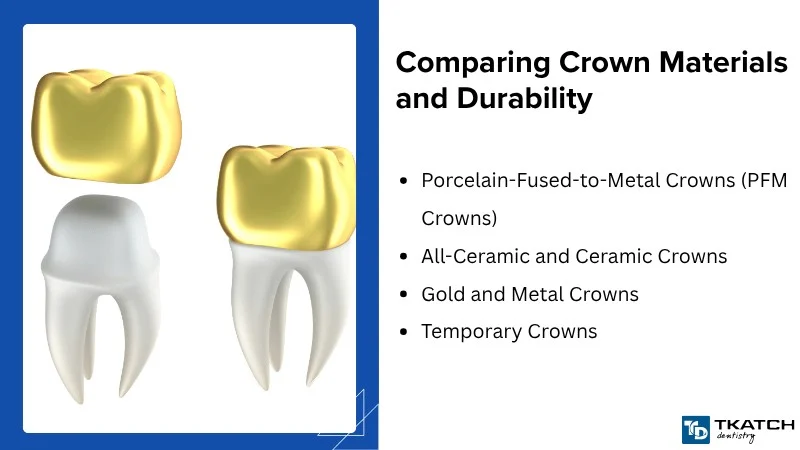
Porcelain-Fused-to-Metal Crowns (PFM Crowns)
Porcelain-fused-to-metal crowns combine a metal base with a porcelain outer layer for a natural appearance. These crowns work well for front teeth because they look more like your real teeth than all-metal options.
PFM crowns have been the most popular cosmetic solution for over 60 years, though they do have some drawbacks. The porcelain layer can chip over time, especially if you grind your teeth or bite hard foods.
As your gums naturally recede with age, the metal edge may become visible as a dark line near the gum.
A porcelain-fused-to-metal crown typically lasts 5-15 years with proper care. Good dental hygiene can extend this lifespan.
Dentists still use these metal-backed restorations for bridges that replace missing teeth because they offer decent strength at a reasonable cost.
All-Ceramic and Ceramic Crowns
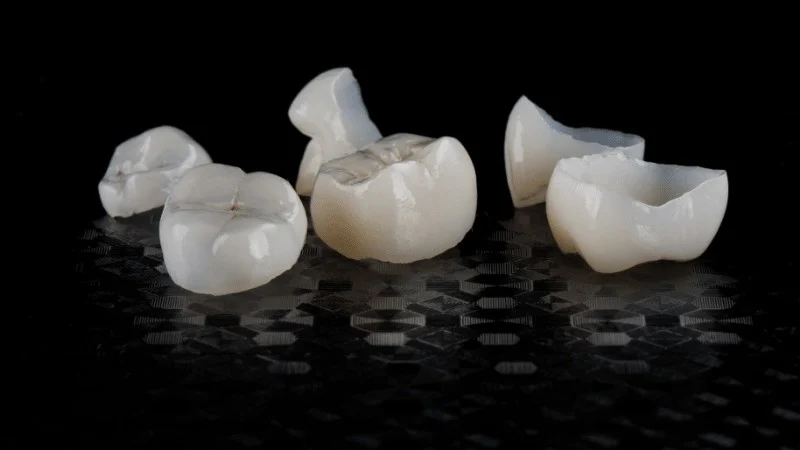
All-ceramic crowns and ceramic crowns provide the best natural appearance of any crown type. Zirconia and lithium disilicate are two popular ceramic materials that offer different benefits.
Zirconia crowns are made from zirconium dioxide, a material related to titanium. These are the strongest non-metallic crowns available and resist fractures extremely well.
With good oral hygiene, zirconia crowns can easily last 10-15 years or longer.
Lithium disilicate is currently the most prescribed crown material by dental laboratories. This glass ceramic material is strong and can be adjusted for translucency to match your natural teeth.
Your dentist can make these crowns in the office during a single visit using special equipment. They fit well, bond strongly to teeth, and also last 5-15 years or more with proper maintenance.
Gold and Metal Crowns
Gold crowns have been used for over 100 years because of their exceptional strength and durability. They rarely chip or crack and fit teeth very precisely.
Research shows gold crowns have a 95 percent survival rate over 10 years, and with proper care, they can last for decades.
The main downside is their obvious metallic appearance. Dentists usually recommend gold crowns for back molars where they won’t show when you smile.
Many dentists now mix gold with other metals like palladium, chromium, or nickel. This keeps the crown strong while reducing the cost. Metal crowns of all types are incredibly durable and can often exceed 20 years of service.
Temporary Crowns
Temporary crowns protect your tooth while your permanent crown is being made at a dental laboratory. Your dentist typically makes these from acrylic or composite resin materials during your first appointment.
These crowns are designed to last only a few weeks. They’re much weaker than permanent crowns and can break or fall off if you’re not careful. You should avoid sticky or hard foods while wearing a temporary crown.
Your dentist will use temporary cement that’s strong enough to hold the crown in place but weak enough to remove it easily.
Never try to reattach a temporary crown yourself if it falls off—call your dentist right away for an emergency appointment.
Factors Affecting Crown Lifespan
Your dental crown’s durability depends on how well you care for it, your daily habits, and the quality of the fit. Proper maintenance and protective measures can add years to your crown’s life.
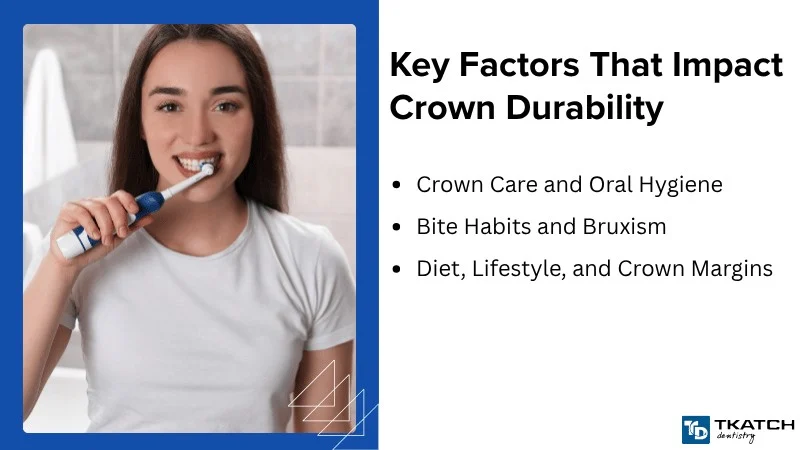
Crown Care and Oral Hygiene
Good oral hygiene is the most important factor in determining how long your crown will last. You need to brush your teeth two to three times daily and floss at least once a day to prevent problems around your crown.
Regular dental cleanings every six months help your dentist spot issues early before they become serious.
Without proper care, bacteria can build up where your crown meets your natural tooth, leading to recurrent decay underneath the restoration.
Recurrent caries is one of the main reasons crowns fail. When decay develops under a crown, your dentist must remove it, treat the decay, and place a new crown.
Flossing around your crown is just as important as brushing because it removes food particles and bacteria from areas your toothbrush can’t reach.
Bite Habits and Bruxism
Your daily habits can significantly shorten your crown’s lifespan. Using your teeth to open packages, tear tags, or crack nuts puts excessive pressure on your crown and can cause it to crack or become loose.
Bruxism, or grinding and clenching your teeth, is especially damaging to crowns. This habit typically happens at night while you sleep and can wear down the surface of ceramic crowns or compromise their stability.
A custom mouthguard can protect your crown while you sleep and prevent damage from grinding.
Chewing on hard objects like ice, pencils, or hard candy also threatens your crown’s integrity. These habits apply force that crowns aren’t designed to handle.
Diet, Lifestyle, and Crown Margins
The foods you eat affect how long your crown lasts. Sticky foods like caramel, taffy, and certain breads can pull on your crown and loosen the cement holding it in place.
Crown margins are where your crown meets your natural tooth. This junction point is critical for your crown’s success.
When gaps develop at the crown margins, bacteria and food particles get trapped, leading to decay and gum problems.
How well your dentist prepared your tooth and fitted your crown affects the quality of these margins. Poor margins allow bacteria to enter and cause recurrent decay.
Your lifestyle choices, including smoking and excessive alcohol consumption, can also weaken the bond between your crown and tooth while increasing your risk of gum disease around the restoration.
When and Why Crowns Should Be Replaced
Crowns don’t last forever and will eventually need replacement due to normal wear, damage, or problems developing underneath.
Knowing the warning signs and typical replacement timeline helps you maintain good oral health and avoid more serious dental issues.
Signs a Crown Needs Replacement
You should watch for several clear indicators that your crown may need to be replaced. Pain or sensitivity in the crowned tooth often means decay has developed underneath, which requires removing the old crown to treat the problem.
A loose or unstable crown is another major warning sign. You might notice this when chewing sticky foods like caramel or bread.
Visual changes also signal replacement needs. Gaps between the crown and tooth allow food and bacteria to collect, leading to recurrent decay.
If you see the metal edge showing as your gums recede, or if the crown is chipped or cracked, it’s time for a replacement.
Common replacement indicators include:
- Pain or sensitivity in the crowned tooth
- The crown feels loose or moves slightly
- Visible gaps or open margins around the crown
- Chips, cracks, or breaks in the crown material
- Discoloration or aesthetic concerns
How Often Do Crowns Need to Be Replaced?
Most dental crowns last between 5 to 15 years before needing replacement. The specific lifespan depends on the material used and how well you care for your teeth.
Gold crowns typically last the longest, often serving well for decades with proper care. Zirconia crowns also offer excellent durability, easily lasting 10-15 years or more.
Porcelain-fused-to-metal and lithium disilicate crowns generally last 5-15 years.
Your oral hygiene habits significantly affect how often crowns need to be replaced. Brushing twice daily, flossing once per day, and getting dental cleanings every six months help extend crown life.
Habits like grinding your teeth, chewing ice, or using your teeth as tools can shorten a crown’s lifespan considerably.
Replacing a Crown Early
Sometimes you need to replace a crown before it reaches the end of its expected lifespan. Recurrent caries developing under the crown is the most common reason for early crown replacement.
Accidents or injuries can crack or dislodge a crown, requiring immediate replacement. If the tooth structure underneath becomes compromised or breaks, you’ll need a new crown even if the old one seemed fine.
Aesthetic reasons also drive replacing a crown early. You might want a whiter crown to match teeth you’ve had whitened, or you may simply prefer a different shape or more natural appearance.
Front tooth crowns often get replaced earlier than back teeth because appearance matters more in visible areas.
Extending the Life of Your Dental Crowns
Taking care of your dental crown properly can add years to its lifespan. Your daily habits and routine dental care play the biggest role in how long your crown will last.
Tips for Long-Lasting Crowns
Good oral hygiene is the most important factor in protecting your crowns. You should brush your teeth at least twice a day with fluoride toothpaste.
Make sure to floss once daily, paying special attention to the crown margins where your crown meets your natural tooth.
Avoid using your teeth as tools to open packages or bottles. Don’t chew on hard objects like ice, pencils, or hard candy. These habits can crack or chip your crown.
If you grind your teeth at night, ask your dentist about a custom nightguard. Grinding can wear down your crown’s surface and damage it over time, especially if you have a ceramic crown.
Stay away from sticky foods like caramel and taffy when possible. These can pull at your crown and loosen the bond between the crown and your tooth.
Importance of Regular Dental Visits

Getting dental cleanings every six months helps your dentist spot problems early. During these visits, your dentist checks the crown margins for gaps or signs of decay underneath.
Professional cleanings remove plaque and tartar that regular brushing can’t reach. This prevents bacteria from building up around your crown and causing damage to the tooth underneath.
Your dentist can also take X-rays to check for decay that isn’t visible to the naked eye. Catching issues early means you can fix small problems before they require crown replacement.
Frequently Asked Questions
Crown lifespan varies based on location in your mouth, the type of material used, and whether you’ve had other dental work like root canals. Certain warning signs can help you know when it’s time for a replacement.
How long do dental crowns typically last on molars compared to other teeth?
Crowns on your molars often experience more wear because these teeth handle the heavy work of chewing. The constant pressure and grinding can affect how long they last.
Most molar crowns last between 10-15 years with good care. The material you choose makes a difference in durability for these back teeth.
Do crowns on front teeth last as long as crowns on back teeth?
Front teeth crowns may not last as long as crowns on your back teeth. Crowns on front teeth may give shorter service because looks matter more than durability in this area.
You might need to replace a front tooth crown sooner if it chips or the color no longer matches your other teeth. These crowns take less chewing force but are more visible when you smile.
How long can a dental crown last after a root canal treatment?
A crown placed after a root canal can last just as long as any other crown. The average lifespan of a crown is about 10 years, whether you’ve had a root canal or not.
Your root canal tooth is actually protected by the crown. The health of your remaining tooth structure and your oral hygiene habits play bigger roles in longevity than the root canal itself.
What are the signs that a dental crown may need to be replaced?
Pain around your crowned tooth often means decay has formed underneath. You might also notice your crown feels loose or moves when you chew sticky foods.
If the crown is broken or there’s space between the crown and adjacent teeth that lets food get stuck, you need a replacement. Changes in how your crown looks, like chipping or discoloration, are also warning signs.
What usually happens to dental crowns after 10 years of wear?
After 10 years, your crown may show normal wear from daily use. The fit can change as your gums naturally recede over time.
Dental crowns typically need replacement every 10 to 15 years, though many last longer with excellent care. Your dentist will check for decay, cracks, or gaps during regular visits.
How do different crown materials (like zirconia or porcelain) affect how long a crown lasts?
Gold crowns have a 95 percent survival rate over 10 years and can last for decades. They’re incredibly strong but don’t look natural.
Zirconia crowns can easily last 10-15 years or longer because they resist fractures better than other materials. Porcelain-fused-to-metal crowns typically last 5-15 years but may chip more easily.
Lithium disilicate crowns also last at least 5-15 years and offer a good balance of strength and appearance.