

You bought the whitening kit, followed the steps, and waited for that bright new smile. But your teeth look almost the same as before.
If you’re wondering why your teeth whitening is not working, you’re not alone. This can be frustrating, especially after spending time and money on the process.
The truth is that whitening doesn’t work the same way for everyone, and some types of stains may not respond to whitening at all.
When used for the right type of discoloration, teeth whitening can be an effective way to brighten your smile and reduce noticeable surface stains.
However, some stains develop deep inside your teeth, while toothpaste and whitening strips mainly target surface stains. Your natural teeth also have their own shade, which whitening cannot always change significantly.
Understanding why your smile isn’t responding to at-home teeth whitening can save you time, money, and frustration.
This guide walks you through the reasons whitening might not be giving you the results you want. You’ll learn what makes certain stains harder to remove, when cosmetic dentistry options such as a smile makeover may be worth considering, and how to protect your enamel while brightening your smile safely. By the end, you’ll have a clearer idea of what steps to take next.
Key Takeaways
- Figuring out what’s causing your tooth discoloration helps you pick a solution that actually works.
- Some stains and natural tooth shades don’t respond to over-the-counter products, no matter how long you use them.
- Protecting your enamel and following the right routine helps you get brighter results that last longer.
Table of Content
- The First Step: Identify Why Your Teeth Are Discolored
- Common Reasons At-Home Whitening Falls Short
- When Whitening Cannot Change the Color of Your Teeth
- What Actually Works for a Brighter, More Even Smile
- How to Whiten Safely Without Damaging Enamel
- Keeping Your Results From Fading Too Quickly
- Frequently Asked Questions
The First Step: Identify Why Your Teeth Are Discolored
Not all stains are the same, and that’s why some whitening treatments work great for one person but do nothing for another.
Your teeth might be dealing with surface stains, deep internal stains, or color mismatches from old dental work; and each one needs a different fix.
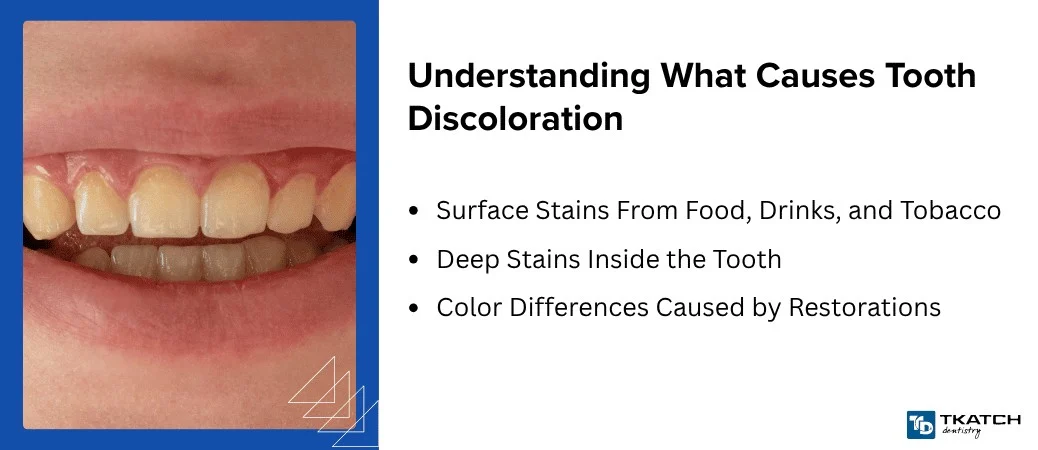
Surface Stains From Food, Drinks, and Tobacco
If your teeth have picked up a yellow or brownish tint over time, staining foods and drinks are likely the cause.
Coffee, tea, red wine, and dark berries all leave color behind on your enamel, which is the hard outer layer of your teeth.
Tobacco use adds to this problem too. Both smoking and chewing tobacco leave stubborn marks on natural teeth that build up the longer you use them.
The good news is that these surface stains usually respond well to teeth whitening products. Since the stain sits on top of your enamel rather than inside it, whitening gels and strips can often break it down and lift it away.
Deep Stains Inside the Tooth
Some stains don’t sit on the surface at all. Instead, they form inside the tooth structure itself, which makes them much harder to remove with regular whitening.
This type of staining, known as intrinsic discoloration, can come from several sources.
Taking certain antibiotics like tetracycline as a child, having too much fluoride while your teeth were forming, or experiencing a tooth injury can all cause this kind of internal color change.
Aging plays a role too. As you get older, the outer enamel layer naturally thins, which lets the darker tissue underneath show through more clearly.
Whitening treatments often struggle with these deeper stains. If your teeth look gray, brown, or have dark spots that whitening hasn’t touched, this could be why.
Color Differences Caused by Restorations
Sometimes the discoloration you’re noticing isn’t really about your natural teeth at all. It’s about dental work that doesn’t match anymore.
Fillings, crowns, veneers, and bonding are all made from materials that don’t respond to whitening products the same way your natural teeth do.
This means that whitening your teeth can actually make the mismatch worse, since your natural teeth get lighter while the dental work stays the same shade.
If you have older restorations, they may have also picked up their own stains or started to yellow over time.
This creates an uneven look across your smile that whitening alone won’t fix, since the problem isn’t really about your dental health; it’s about mismatched materials.
Common Reasons At-Home Whitening Falls Short
Store-bought whitening treatments often disappoint because of a few simple, fixable problems.
Your results may be limited by what is on your teeth, how well products fit your mouth, what is actually in the formula, and how closely you follow the directions.
Plaque and Tartar Block Whitening Products
If you have not had a dental cleaning in a while, plaque and tartar could be sitting between your teeth and the whitening gel.
These buildups act like a barrier. No matter how strong your product is, it cannot reach the enamel underneath.
This is one of the most overlooked reasons whitening treatments fail to deliver visible change.
A basic dental cleaning at your dentist’s office removes this layer first. Once your teeth are clean, whitening products have a much better chance of actually working.
Whitening Strips Do Not Fit Every Smile
Whitening strips are made in one general shape, but real mouths come in many shapes and sizes.
If your teeth are crowded, gapped, or curved differently than average, the strip may not touch every surface evenly.
This often leads to patchy or striped results, with some areas whiter than others.
You might also see:
- Gel that slides off before the timer ends
- Gaps where the strip does not reach back teeth
- Uneven contact along curved or overlapping teeth
Custom-fitted trays, which press evenly against every tooth, tend to solve this fitting problem much better than one-size-fits-all strips.
Weak or Inconsistent Whitening Formulas
Many drugstore kits use lower amounts of hydrogen peroxide or carbamide peroxide, the ingredients that actually break down stains.
Lower strength means slower, weaker results, especially on teeth with deeper or older discoloration.
Some kits also have inconsistent gel amounts from strip to strip, so one application might work better than the next.
This makes it hard to know if your oral care routine is even the problem, when really, the formula strength was never enough to begin with.
Not Using Treatment Long Enough or as Directed
Even a good product will not work if you stop too soon or skip steps.
Whitening usually needs steady, repeated use over one to two weeks, not just a single try.
Common mistakes include:
- Stopping after one or two uses because you see no change yet
- Eating or drinking soon after treatment, which can undo progress
- Skipping days, which slows down the overall bleaching process
Following the timing and frequency listed on the package matters as much as the product itself.
When Whitening Cannot Change the Color of Your Teeth
Some teeth simply will not get whiter, no matter what product you use or how long you use it. This happens when the color problem is inside the tooth, in a dental material, or in a material that isn’t a natural tooth at all.
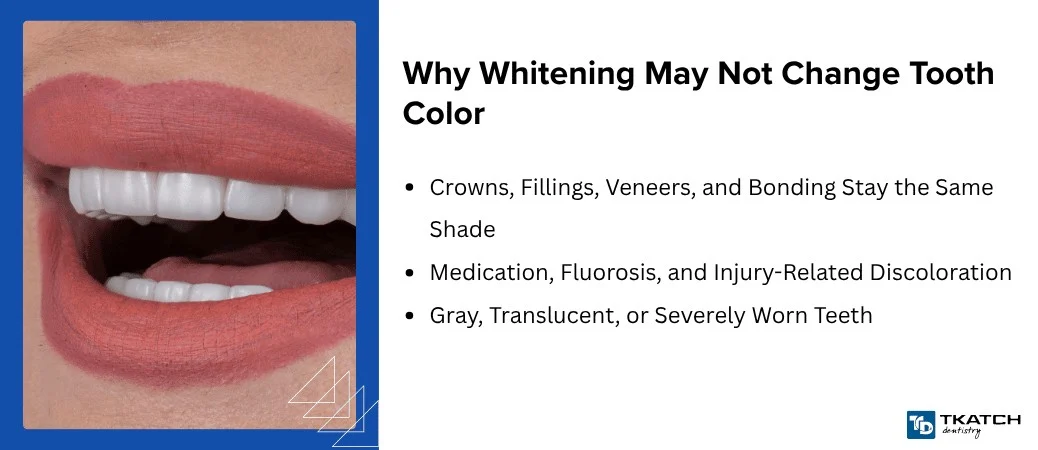
Crowns, Fillings, Veneers, and Bonding Stay the Same Shade
If you have crowns, fillings, veneers, or bonding on your front teeth, whitening won’t touch them. These materials are made from porcelain, resin, or metal, and they don’t respond to peroxide the way natural enamel does.
This can create an odd result. Your natural teeth may lighten, but your restorations stay the exact shade they were when placed. The mismatch often becomes more obvious after whitening, not less.
If you’re planning cosmetic work, talk to your dentist first. Whitening your natural teeth before getting new restorations lets your dentist match the new work to your brighter shade instead of the other way around.
Medication, Fluorosis, and Injury-Related Discoloration
Some stains form inside the tooth, not on the surface, so whitening gel can’t reach them. This is called intrinsic staining, and it has a few common causes.
- Tetracycline antibiotics taken during childhood can bind to developing teeth and cause gray or brown banding that does not respond to typical whitening products.
- Fluorosis, caused by too much fluoride exposure while teeth were forming, can leave white spots or streaks in the enamel itself.
- Tooth trauma, like a hard hit to a tooth, can damage internal tissue and cause a single tooth to darken over time.
In each case, the color problem sits below the enamel surface. This is one of the main reasons regular whitening treatments fail to make a real difference.
Gray, Translucent, or Severely Worn Teeth
Teeth that look gray, glassy, or see-through usually have very thin enamel. As enamel wears down from age, acid, or grinding, the darker dentin layer underneath becomes more visible.
Whitening only works on the enamel surface, so there’s less material left for it to lighten. In some cases, whitening gel on worn enamel can even cause pain or sensitivity instead of a brighter smile.
For teeth like these, cosmetic dentistry offers better options than bleaching. Veneers and bonding can cover the discoloration and rebuild a natural-looking, even shade without stressing the remaining enamel.
![[Tkatch Dentistry] Cosmetic Pricing Guide NGP Magazine](https://www.tkatchdentistry.com/wp-content/uploads/2026/08/Tkatch-Dentistry-Cosmetic-Pricing-Guide-NGP-Magazine.webp)
What Actually Works for a Brighter, More Even Smile
If your at-home whitening kit lets you down, the fix usually starts with a dental exam, moves into stronger whitening treatments, and sometimes ends with cosmetic dentistry for stains that won’t budge.
Here’s how to get real results this time.
Start With an Exam and Professional Dental Cleaning
Before you try whitening again, start with a checkup.
General dentistry services such as routine exams and professional cleanings can help identify plaque buildup, cavities, gum problems, or other issues that may be affecting your whitening results.
This step also helps you find out why your teeth look dull in the first place. You might have stains from coffee or wine, or you might have deeper discoloration that whitening alone can’t fix.
Skipping this step is one of the most common reasons whitening doesn’t work for everyone. A clean, healthy mouth gives any whitening treatment a much better shot at working.
Professional Teeth Whitening Options
Store-bought kits often use weak bleaching agents that just can’t compete with what your dentist can offer.
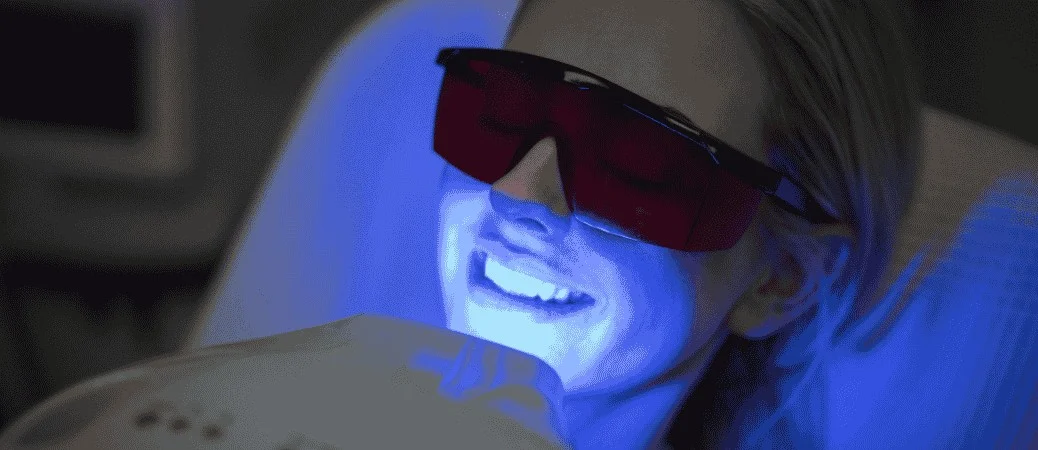
Professional teeth whitening uses higher amounts of hydrogen peroxide, sometimes up to 40%, compared to the low percentages found in drugstore products.
Your dentist applies the gel carefully and can adjust the strength based on your teeth and comfort level.
Some offices also use light or laser activation to speed up results. This combination often means:
- Faster results, sometimes in one visit
- More even whitening across all your teeth
- Reduced risk of gum irritation from a poorly fitted tray
Because the process is monitored by a professional, you get a safer and more predictable outcome than trying to guess the right product yourself.
Custom Take-Home Trays vs. In-Office Whitening
You have two main paths for professional whitening: in-office treatment or custom take-home trays.
In-office whitening gives you fast results, often in under an hour. This works well if you have an event coming up and want a quick change.
Custom trays, on the other hand, are made from a mold of your teeth. You wear them at home with a dentist-grade whitening gel for a set number of days.
| Option | Time to Results | Best For |
| In-office | 1 visit | Fast results |
| Custom trays | 1-2 weeks | Gradual, even whitening |
Both are more effective than generic strips because they fit your teeth exactly, so the gel stays in contact with your enamel longer.
Cosmetic Alternatives for Stains Whitening Cannot Remove
Some stains sit too deep for any bleaching agent to fix. This is common with intrinsic discoloration caused by medication, tooth trauma, or naturally dark dentin.
In these cases, cosmetic dentistry offers other paths to a brighter smile. Bonding uses a tooth-colored resin to cover stains and can be done in a single visit.
Veneers are thin shells placed over the front of your teeth to hide discoloration completely. For more involved cases, a full smile makeover might combine veneers, bonding, and other treatments to even out both color and shape.
These options tend to cost more than whitening, but they offer a permanent fix for stains that won’t respond to bleaching.
How to Whiten Safely Without Damaging Enamel
You can get whiter teeth without hurting your enamel if you use the right products and don’t overdo it.
The key is knowing how much sensitivity is normal, when whitening becomes too aggressive, and when it’s time to check in with your dentist.
Managing Tooth Sensitivity During Treatment
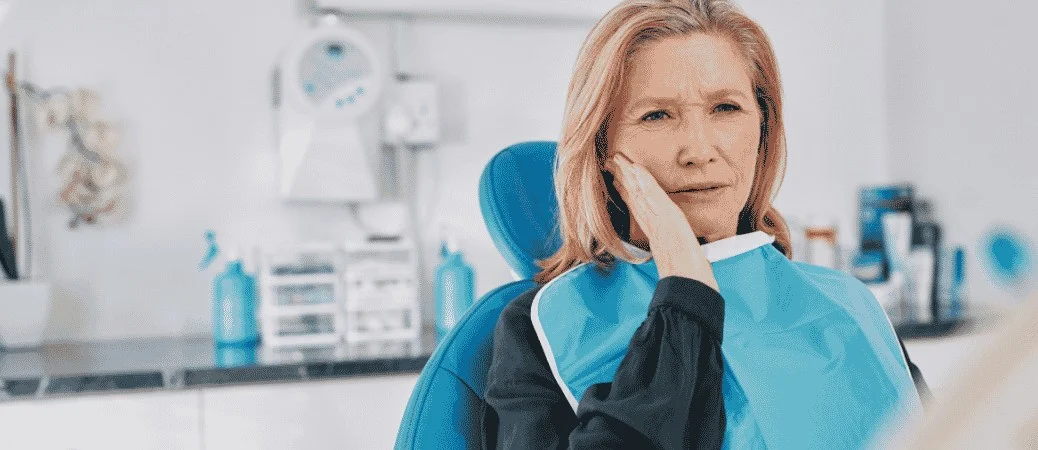
Some tooth sensitivity during whitening is normal. It happens when peroxide gets into the tiny tubes inside your enamel and reaches the nerve.
You can lower this risk in a few simple ways:
- Use a lower peroxide strength. Products with 10% carbamide peroxide or less tend to cause less sensitivity than stronger versions.
- Shorten your treatment time. Follow the product directions closely, and don’t leave whitening gel on longer than needed.
- Try a sensitivity toothpaste. Look for one with potassium nitrate. Use it for a week before you start whitening.
- Take breaks between sessions. Give your teeth a day or two off if you notice discomfort.
If sensitivity doesn’t go away within a day or two after you stop, that’s your body telling you to slow down.
Why Overusing Whitening Products Can Backfire
More whitening does not mean better results. Using strips, gels, or trays too often can wear down your enamel over time.
Once enamel is gone, it doesn’t grow back. This can leave your teeth looking more yellow, not less, because the darker layer underneath (called dentin) starts to show through.
Overuse also raises your risk of lasting tooth sensitivity and gum irritation. Many whitening kits are only meant to be used for a set number of days, then paused for weeks or months.
If you find yourself reaching for whitening strips every week to keep up results, that’s a sign you’re pushing past what your enamel can safely handle.
Custom dentist-made whitening trays tend to be gentler on your enamel because the fit is more precise, which means less gel touches your gums by accident.
When to Pause Treatment and See a Dentist
Stop whitening and call your dentist if you notice any of these signs:
| Warning Sign | What It Might Mean |
| Sharp pain with hot or cold drinks | Enamel wear or exposed dentin |
| White spots or blotchy patches | Uneven bleaching or enamel damage |
| Gum irritation or burning | Gel contact with soft tissue |
| Sensitivity lasting more than a few days | Nerve irritation |
A dentist can check if your enamel is thin, if you have cavities, or if your gums have receded. Any of these issues can make whitening riskier.
Getting a quick checkup before you restart any whitening routine helps protect your long-term oral care and keeps small problems from turning into bigger ones.
Keeping Your Results From Fading Too Quickly
Your teeth whitening results can last for months if you take a few simple steps. Small changes to what you eat, how you brush, and when you see your dentist can make a big difference in your dental health.
Limit New Stains After Whitening
Right after whitening, your teeth are more likely to soak up color from staining foods and drinks. This happens because the whitening process opens up tiny pores in your enamel for a short time.
Try to avoid coffee, tea, red wine, and dark berries for at least 48 hours after treatment.
Common drinks like coffee, tea, and red wine are some of the biggest causes of fading whitening results, so cutting back on them helps your smile stay bright longer.
If you can’t skip these foods and drinks, try a few tricks:
- Use a straw for dark liquids
- Rinse your mouth with water right after eating or drinking
- Wait 30 minutes before brushing after acidic foods
Build a Gentle Daily Oral Care Routine
A good oral care routine helps protect your whitening results every single day. Brush twice a day with a whitening toothpaste, but don’t scrub too hard.
Hard brushing can wear down enamel and make your teeth more likely to stain. Use a soft-bristled brush and gentle, circular motions instead.
Flossing daily also matters more than people think. It removes food particles and plaque between teeth before they can build up and cause discoloration.
Don’t forget to also drink plenty of water throughout the day. Water helps rinse away food particles and keeps your mouth from getting too dry, which can lead to staining over time.
Plan Touch-Ups With Your Dentist
Even with great home care, whitening fades over time. This is normal and doesn’t mean something went wrong with your first treatment.
Talk to your dentist about a touch-up schedule that fits your habits. Most people benefit from professional teeth whitening touch-ups every six months to a year, depending on their diet and lifestyle.
Regular dental visits also let your dentist catch any new staining early. They can recommend the right whitening treatments for your specific needs, whether that’s a quick in-office session or take-home trays.
Sticking to a routine with your dentist is one of the easiest ways to keep your smile bright without starting from scratch each time.
Frequently Asked Questions
Whitening treatments don’t always work the same way for everyone, and there are clear reasons some stains fade quickly while others barely change at all.
Here are answers to some of the most common questions about why whitening might not be giving you the results you expected.
Why aren’t my teeth getting whiter after professional whitening?
Professional whitening works best on surface stains, but it doesn’t always fix every type of discoloration.
If your teeth have internal stains from things like old fillings, root canals, or medication use, whitening gel may not reach deep enough to change the color.
Existing dental work, like crowns or veneers, also won’t whiten since they’re made from materials that don’t respond to bleaching agents.
A dentist can check these factors before recommending treatment to help you understand what’s realistic for your smile.
Why is there no noticeable difference after I whiten my teeth?
Sometimes the stains are just too stubborn for over-the-counter products.
Store-bought strips and gels usually have lower concentrations of whitening ingredients compared to professional treatments, so they may not be strong enough to break down tougher stains.
The type of stain matters a lot here too. If your stains don’t respond to typical bleaching methods, it might be time to talk to a dentist about stronger, in-office options.
Why won’t my teeth whiten even though I brush twice a day?
Brushing helps remove surface stains from things like coffee, tea, or wine, but it can’t reach stains that are set deeper into your enamel or dentin.
Good brushing habits keep your teeth clean, but they don’t bleach or lighten the natural color of your teeth.
If brushing alone isn’t helping, the stains may be internal rather than external, which means a whitening toothpaste won’t be strong enough to fix them.
Can severely yellow or deeply stained teeth still be whitened?
Yes, in many cases. Even teeth with heavy yellowing or deep stains can show real improvement with professional whitening treatments, especially when a dentist customizes the approach based on your specific stains.
That said, whitening can’t change the base color of your teeth completely. If you’re dealing with intrinsic stains, understanding your options can help you find a treatment that actually works for your situation.
Why do my teeth look darker near the gums after whitening?
This usually happens because the enamel near the gumline is thinner than in other areas of your tooth.
Since enamel is naturally more translucent there, the yellow-toned dentin underneath can show through more, making that area look darker even after whitening.
If one tooth in particular looks darker than the rest, it could be a sign of internal damage from an old injury. This type of discoloration is different from surface staining and often needs a different kind of treatment altogether.
Are some types of tooth discoloration impossible to remove with whitening treatments?
Yes, some stains simply won’t respond to whitening gels or strips no matter how often you use them.
Stains caused by trauma, certain medications like tetracycline, or aging dentin are considered intrinsic, meaning they come from inside the tooth rather than on the surface.
In these cases, whitening treatments can lighten the surrounding areas but won’t erase the discoloration itself.