


Getting dental implants is an exciting step toward restoring your smile, but it’s natural to have questions about what comes next. “How long do dental implants take to heal?” or “What will the healing process feel like?” These are typical concerns, and understanding what to expect can make recovery smoother and less stressful.
At Tkatch Dentistry in High Point, NC, we’re committed to supporting you at every stage of your dental implant experience. In this blog, we’ll guide you through the dental implant healing stages, explain how to care for your new implant, and help you feel confident about the process.
The Stages of Dental Implant Healing
Healing after a dental implant procedure happens in stages. Here’s what you can expect as your mouth adjusts and recovers:
First Stage of Dental Implant Healing Stages
In the first 24–48 hours, it’s normal to experience minor swelling, soreness, and bleeding around the implant site. These are common side effects as your body begins the healing process. To manage discomfort, we recommend:
- Using a cold compress to reduce swelling.
- Taking prescribed or over-the-counter pain medication as directed.
- Sticking to a soft-food diet to avoid irritating the area.
During this stage, keeping the implant site clean is crucial. We’ll provide you with specific aftercare instructions to help minimize the risk of infection.
Stage 2: Osseointegration (Fusing with the Bone)
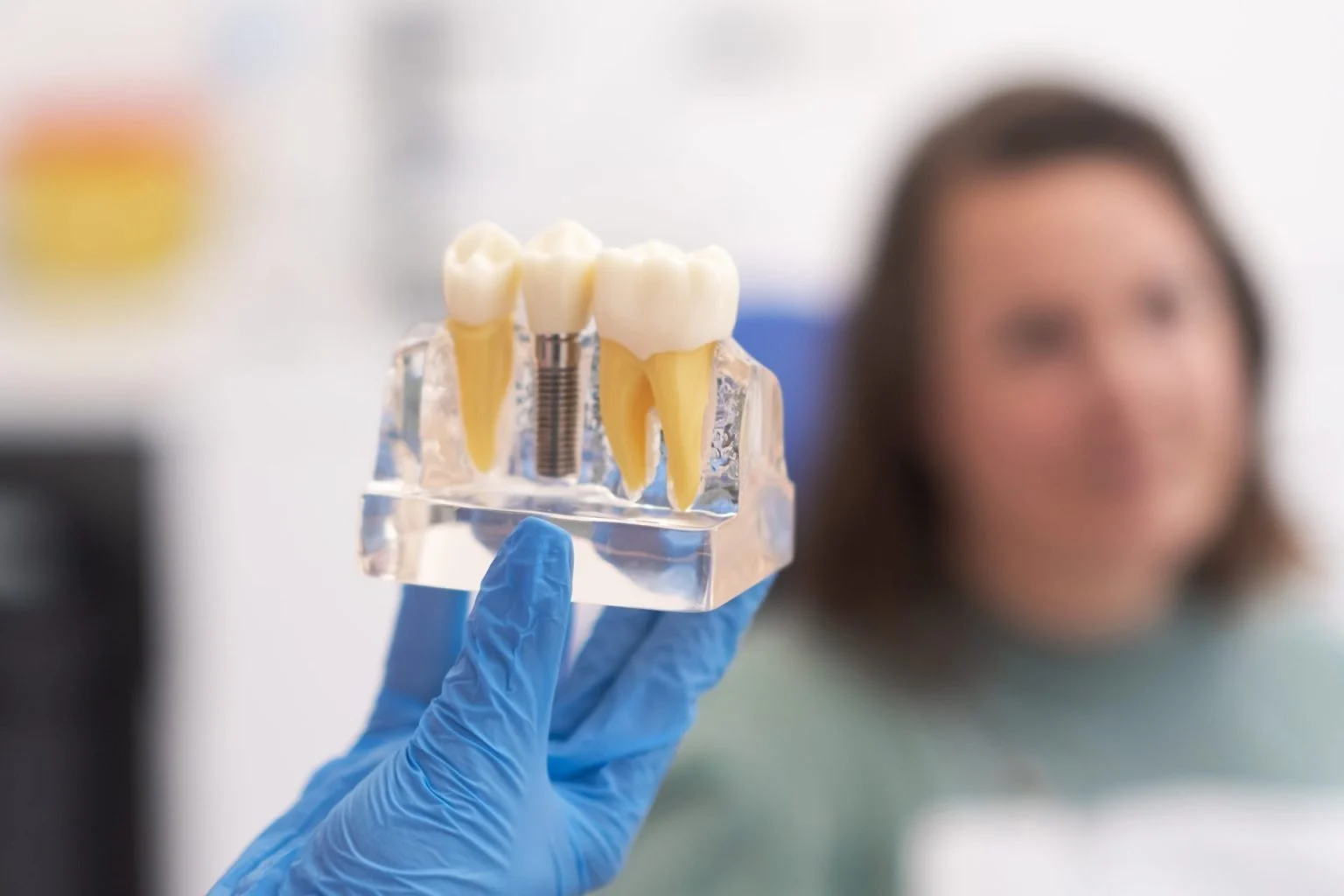
This is one of the most critical stages in the healing process. During the next few months, the titanium implant post will fuse with your jawbone in a process called osseointegration. This creates a stable foundation for the crown, which will later be attached to the implant.
During this time:
- You may notice a gradual improvement in comfort and swelling.
- Maintaining excellent oral hygiene prevents infection and supports healing.
- Avoid putting pressure on the implant by chewing hard or sticky foods.
Osseointegration, the process where the implant fuses with the jawbone, typically takes 3–6 months. However, factors like bone grafting, smoking, or underlying health conditions may extend this timeframe.
Stage 3: Attaching the Abutment and Crown
Once the implant fully integrates with your jawbone, we’ll attach the abutment—a small connector that holds the crown in place. After this, the custom crown is secured to complete your new tooth. Once the abutment is attached, a healing period of 1–2 weeks may be needed before placing the permanent crown.
This stage is usually straightforward, and most patients experience minimal discomfort. The result is a fully functional, natural-looking tooth that blends seamlessly with the rest of your smile.

How Long Do Dental Implants Take to Heal?
The healing process varies for each person. While many patients feel better within a few days, the complete healing timeline can take several months. Factors that influence healing include:
- Your overall health and immune system.
- The quality and density of your jawbone.
- How well you follow aftercare instructions.
By maintaining good oral hygiene, attending follow-up appointments, and avoiding habits like smoking, you can support a quicker recovery and ensure the success of your implant.
Tips for a Smooth Recovery
Here’s how to take care of yourself during the dental implant healing stages:
- Practice Excellent Oral Hygiene
Keep the implant site clean by gently brushing and rinsing with an antibacterial mouthwash as directed. Avoid flossing around the implant until we advise you. - Stick to Soft Foods
Foods like mashed potatoes, yogurt, and scrambled eggs are easy on your implant and won’t disrupt healing. Gradually reintroduce harder foods as you feel comfortable. - Manage Discomfort
Mild swelling and soreness are normal. Use a cold compress and follow your prescribed pain management plan for relief. - Avoid Bad Habits
Habits like smoking or chewing on hard objects can interfere with healing and compromise the implant’s stability. - Attend Follow-Up Appointments
Regular follow-ups let us track your healing progress and address any concerns early.
By following these guidelines, you’ll be on your way to a strong, healthy implant and a restored smile.
What Happens If Healing Doesn’t Go as Planned?
Complications like prolonged swelling, pain, or difficulty chewing can sometimes arise. If this happens, don’t hesitate to reach out. At Tkatch Dentistry, our doctors have extensive experience in implant dentistry and are equipped to address any concerns.
The most common issues—like mild inflammation or discomfort—can often be resolved promptly. Our priority is to ensure your implant heals successfully and functions as it should.
Why Trust Tkatch Dentistry with Your Dental Implants in High Point, NC?
At Tkatch Dentistry, we understand that getting dental implants is an investment in your health and confidence. We use advanced techniques and high-quality materials to ensure your implant is successful and long-lasting.
We believe in patient-centered care, which means we support you throughout the entire process—from the initial procedure to complete healing. You can trust us to guide you every step of the way.
Understanding the dental implant healing stages helps you feel prepared and confident after your procedure. While healing takes time, the results are worth it—a fully functional, natural-looking smile that boosts your confidence and quality of life.
If you’re ready to restore your smile with dental implants, call Tkatch Dentistry in High Point, NC, at (336) 901-9516 today. Let us help you get the smile you deserve!