


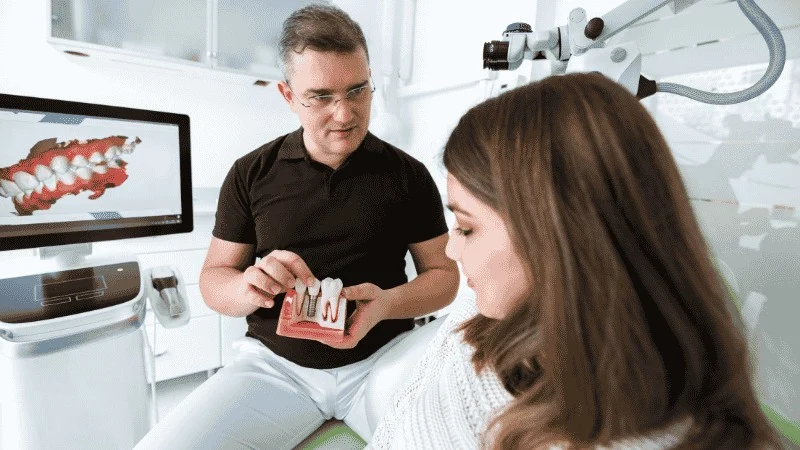
Losing multiple teeth affects more than just your smile. It can make eating difficult, change how you speak, and impact your confidence in social situations.
The good news is that modern dentistry offers several effective ways to restore your mouth.
When you’re missing multiple teeth, you have three main replacement options: dental implants, dental crown bridges, and dentures, each with different costs, benefits, and requirements for your specific situation.
The right choice depends on factors like your budget, how many teeth you need to replace, and your overall oral health. Some options provide permanent solutions while others are removable.
Understanding what each tooth replacement option offers helps you make an informed decision. This guide breaks down the costs, benefits, and what you can expect from each method so you can choose the best solution for your needs.
Key Takeaways
- Multiple tooth replacement options include dental implants, bridges, and dentures with varying costs and permanence levels
- Your bone health, budget, and number of missing teeth determine which replacement method works best for you
- Proper care and maintenance after tooth replacement help ensure your new teeth last and protect your oral health
Table of Content
- Understanding the Impact of Multiple Missing Teeth
- Comprehensive Tooth Replacement Options
- Key Factors When Choosing a Replacement Method
- Comparing Benefits, Drawbacks, and Longevity
- Maintaining Oral Health After Tooth Replacement
- Frequently Asked Questions
Understanding the Impact of Multiple Missing Teeth
Missing teeth affect more than just your smile. They can lead to serious problems with your jawbone, oral health, and daily functions like eating and speaking.
Consequences for Oral Health and Facial Structure
When you lose multiple teeth, the remaining teeth often shift into the empty spaces. This movement can create gaps and change your bite alignment.
Your teeth may become crooked or tilted, making them harder to clean properly.
The shifting also puts extra pressure on certain teeth. This can cause uneven wear and increase your risk of tooth decay and gum disease.
Your facial muscles lose support when teeth are missing, which can make your face look sunken or older than you are.
The changes happen gradually but become more noticeable over time. Your lips may appear thinner and your cheeks might cave inward. These changes to your facial structure can affect your appearance and self-confidence.
Risks of Bone Loss and Jawbone Density Changes
Your jawbone needs stimulation from tooth roots to stay healthy and strong. When you experience tooth loss, the bone that once supported those teeth starts to break down. This process is called resorption.
Bone loss begins within the first few months after losing a tooth. The area where the tooth was located can lose up to 25% of its width in the first year alone. Without intervention, this bone loss continues and accelerates over time.
The loss of jawbone density creates several problems. Your remaining teeth may become loose because they lack proper support.
The bone deterioration can also make it harder to get dental implants later if you wait too long to address the missing teeth.
Effects on Chewing Function and Speech
Multiple missing teeth make it difficult to chew food properly. You may find yourself avoiding certain foods like meat, raw vegetables, or nuts because they’re too hard to eat. This limitation can affect your nutrition and overall health.
Your teeth work together to break down food efficiently. When several are missing, the remaining teeth must handle all the work. This puts extra stress on them and can lead to damage or additional tooth loss.
Missing teeth also affect how you speak. Certain sounds require your tongue to press against your teeth. Without those teeth, you might develop a lisp or have trouble pronouncing words clearly.
This can impact your communication and social interactions.
Importance of Timely Tooth Replacement
Acting quickly to replace missing teeth helps prevent the cascade of problems that follow tooth loss. The sooner you address the issue, the more jawbone health you preserve.
This makes treatment options easier and more effective.
Waiting too long can limit your choices for replacement. Advanced bone loss may require bone grafting before you can get implants. The longer you wait, the more expensive and complicated treatment becomes.
Early replacement also stops your remaining teeth from shifting. This protects your bite and prevents additional oral health problems.
Taking action within the first few months after tooth loss gives you the best chance for successful treatment and long-term results.
Comprehensive Tooth Replacement Options
When you’re missing multiple teeth, you have several proven solutions that range from permanent implants to removable appliances. Each option varies in cost, durability, and how it affects your daily life.
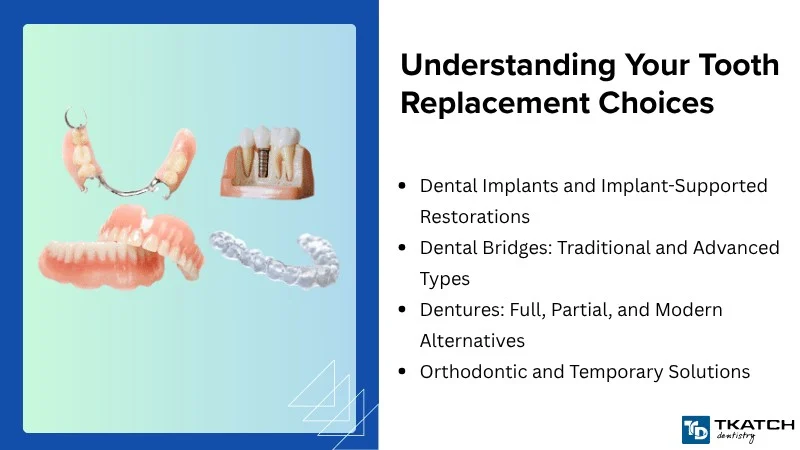
Dental Implants and Implant-Supported Restorations
Dental implants are titanium posts that your dentist places into your jawbone to act as artificial tooth roots. They’re the most durable option for replacing multiple teeth because they fuse with your bone over time.
If you’re missing several teeth in a row, implant-supported bridges don’t require support from your natural teeth like traditional bridges do.
Your dentist places two or more implants and attaches a custom bridge between them. This approach preserves your healthy teeth and prevents bone loss in your jaw.
All-on-4 dental implants are a specialized technique where four strategically placed implants support a full arch of replacement teeth. This method works well if you’ve lost most or all teeth in your upper or lower jaw.
Implant-supported dentures combine the stability of implants with the coverage of dentures.
You can choose between snap-on dentures (also called overdentures) that you remove for cleaning, or fixed versions that stay in place permanently.
Mini dental implants are a smaller, less invasive option that can support certain types of dentures at a lower cost.
Dental Bridges: Traditional and Advanced Types
A traditional bridge uses crowns on your natural teeth to support one or more artificial teeth in between. Your dentist reshapes the teeth on either side of the gap and places crowns over them to anchor the bridge.
Maryland bridges (also called resin-bonded bridges) are a more conservative option that uses metal or porcelain wings bonded to the back of your adjacent teeth.
This type preserves more of your natural tooth structure but works best for front teeth with less chewing pressure.
A cantilever bridge attaches to teeth on only one side of the gap. Dentists use this design when you only have natural teeth on one side of the missing tooth area.
Fixed dental bridges are cemented in place and can’t be removed without professional help. They typically last 10 to 15 years with proper care and feel similar to your natural teeth when eating and speaking.
Dentures: Full, Partial, and Modern Alternatives
Removable partial dentures replace multiple missing teeth when you still have some healthy natural teeth remaining. They consist of replacement teeth attached to a gum-colored plastic base that connects with a metal framework.
Complete dentures (also called full dentures) replace all teeth in your upper or lower jaw. Traditional dentures rest on your gums and stay in place through suction and adhesive. You need to remove them daily for cleaning and soaking overnight.
Partial dentures use clasps that attach to your remaining natural teeth for stability. While they’re more affordable than implants, partial dentures can move around in your mouth and may affect what foods you can eat comfortably.
A temporary partial denture (sometimes called flipper teeth or a flipper tooth) serves as a short-term solution while you wait for permanent restorations.
These lightweight appliances fill gaps quickly but aren’t designed for long-term use.
Modern alternatives offer better fit and function than traditional options. They use improved materials and precision fabrication techniques to create more comfortable and natural-looking results.
Orthodontic and Temporary Solutions
Clear aligners like Invisalign can sometimes close small gaps from missing teeth through orthodontic space closure. This approach works when you have enough healthy teeth and bone structure to shift teeth into empty spaces.
Your orthodontist evaluates whether moving your existing teeth is better than replacing missing ones. This option eliminates the need for artificial teeth but requires several months of treatment and only works in specific situations.
Temporary solutions give you time to plan for permanent replacements. They protect your oral health and appearance while you save money or heal from extractions.
Your dentist can help you choose a temporary option that fits your timeline and budget.
Key Factors When Choosing a Replacement Method
Your best tooth replacement option depends on your current oral health, how many teeth you’re missing, the strength of your jawbone, and what fits your budget and daily life.
Each of these factors plays a role in determining which treatment will work best for you.
Health and Condition of Existing Teeth and Gums
Your existing teeth and gums need to be healthy enough to support certain replacement options.
If you’re considering a dental bridge, the teeth next to the gap must be strong because they’ll anchor the replacement. Weak or damaged neighboring teeth may not handle this extra pressure well.
Gum disease creates serious complications for any tooth replacement procedure. Active gum disease needs treatment before you can move forward with implants or bridges.
The infection can cause implants to fail or make bridges unstable.
Your oral hygiene habits also matter when choosing a replacement method. Dental implants require the same care as natural teeth, with regular brushing and flossing.
If you struggle to maintain good oral hygiene, removable dentures might be easier to clean since you take them out.
Tooth decay in surrounding teeth can limit your options too. Your dentist may need to treat cavities or damaged teeth before starting any replacement procedure.
Number and Location of Missing Teeth
The number of teeth you need to replace directly affects which treatment makes sense. To replace one tooth, a single implant with a crown works well. For two or three teeth in a row, you might use a bridge or multiple implants.
When you need to replace multiple missing teeth across different areas of your mouth, partial dentures or several individual implants become better choices.
Missing many teeth or all teeth in one jaw may point you toward full dentures or All-on-4 implants.
Location matters just as much as quantity. Front teeth affect your smile and speech, so you’ll probably want a natural-looking option like implants or a fixed bridge.
Back teeth handle most chewing forces, so they need durable replacements that can withstand pressure.
Missing back teeth that aren’t visible might seem less urgent, but they still affect your ability to chew properly. Gaps in the back of your mouth can also cause remaining teeth to shift over time.
Jawbone Health and Bone Grafting Considerations
Your jawbone needs adequate density and volume to support dental implants. When you lose a tooth, the jawbone in that area starts to deteriorate because it no longer receives stimulation from the tooth root.
This bone loss happens gradually over months and years.
Bone grafting can rebuild lost jawbone tissue, but it adds time and cost to your treatment. The grafting procedure requires several months of healing before implants can be placed.
Not everyone is a good candidate for bone grafting, depending on their overall health and the extent of bone loss.
If your jawbone is too weak for implants and you don’t want bone grafting, bridges or dentures become your main options. These don’t require the same bone structure because they don’t attach directly to the jaw.
Your dentist will take X-rays or CT scans to evaluate your bone health. This imaging shows whether you have enough bone for implants or if you’ll need additional procedures first.
Budget, Comfort, and Lifestyle Preferences
Cost differences between replacement options are significant:
- Dentures: $300 and up (most affordable)
- Bridges: $500 to $1,500 per unit
- Implants: $1,500 to $6,000 per tooth
Dentures are usually the cheapest way to replace missing teeth, but they require more daily maintenance. You need to remove them for cleaning and they may slip during eating or speaking.
Comfort levels vary based on the replacement type. Implants feel most like natural teeth because they’re fixed in place. Bridges also stay put but require removing enamel from healthy adjacent teeth.
Removable dentures can feel bulky at first and may cause sore spots.
Your lifestyle affects which option works best. If you want to eat all types of food without restrictions, implants or bridges give you more freedom.
Active people who play sports or travel frequently might prefer fixed options over removable dentures that can get lost or damaged.
The time commitment differs too. Implants take several months from start to finish, while bridges can be completed in a few weeks. Dentures offer the fastest solution if you need immediate tooth replacement.
![[Tkatch Dentistry] Dental Implant Pricing Guide NGP Magazine + Gift Card](https://www.tkatchdentistry.com/wp-content/uploads/2026/08/Tkatch-Dentistry-Dental-Implant-Pricing-Guide-NGP-Magazine-Gift-Card.webp)
Comparing Benefits, Drawbacks, and Longevity
Each tooth replacement method offers different advantages in terms of how well it works, how long it lasts, and what care it requires. The right choice depends on your bone health, budget, and lifestyle needs.
Restoration of Function and Aesthetics
Dental implants restore function and aesthetics most effectively because they replace both the root and crown of missing teeth.
The implant post fuses with your jawbone through osseointegration, creating a stable foundation. Your dentist then attaches an abutment and dental crown to complete the restoration.
Implant-supported bridges eliminate the need to grind down healthy abutment teeth. Traditional bridges require shaping the teeth on either side of the gap to support the dental restoration.
This means removing healthy tooth structure that you can never get back.
Dentures and dental implants both improve chewing, speech, and facial support. Dentures rest on your gums and can slip during eating or talking. Implants feel more like your natural teeth because they’re anchored in bone.
Stability, Chewing Power, and Maintenance Needs
Implants provide the strongest bite force and don’t move while you eat. You brush and floss them like natural teeth. They need regular dental checkups but no special cleaning routines.
Traditional dentures require more daily care. You must remove them after eating to brush away food and adhesive. They should soak overnight in water or cleaning solution instead of staying in your mouth.
Implant-supported overdentures offer better stability than regular dentures. They snap onto two to four posts in each jaw, which keeps them secure without adhesive. You can remove them for cleaning or leave them in place depending on the design.
Dentures need refitting over time as your bite changes.
Long-Term Outcomes: Lifespan and Natural Appearance
Implants can last 20 years or more with proper care. The dental crowns attached to them may need replacement if they crack or break, but the posts stay in place permanently.
Dentures typically last five to seven years before needing replacement. They can look very natural, but the pink acrylic base sometimes shows when you smile or talk.
Bridges depend on the health of your abutment teeth. If those teeth develop decay or weaken, the entire bridge fails. Well-maintained bridges often last 10 to 15 years.
All options can provide a natural appearance when designed properly. Your dentist will match the color and shape of replacement teeth to blend with your smile.
Potential Risks and Complications
Dental implant failures happen about 5 to 10 percent of the time. Problems include infection at the implant site, loose posts, or the bone not fusing properly with the metal. You need enough jawbone density for implants to work.
Denture wearers may experience sores on their gums or trouble keeping dentures in place. These issues often improve with adjustments or better-fitting dentures.
Bridges put extra pressure on abutment teeth, which can lead to problems over time. The teeth supporting the bridge must stay healthy and strong for the restoration to last.
Maintaining Oral Health After Tooth Replacement
Your new teeth need proper care to stay healthy and last as long as possible. Good cleaning habits, disease prevention, and regular dentist visits will protect both your replacement teeth and your natural oral tissues.
Daily Care Routines and Oral Hygiene
You need to brush your replacement teeth twice daily, just like you would natural teeth. Use a soft-bristled toothbrush and non-abrasive toothpaste to avoid scratching dentures or damaging implant surfaces.
Floss once a day around any remaining natural teeth and use special floss threaders or interdental brushes to clean around implant posts or bridge supports.
Food particles and bacteria can build up in these areas and cause problems if not removed.
If you have removable partial dentures, you should take them out and clean them after eating, then soak them overnight. Dental implants and fixed bridges don’t require this extra maintenance step.
Rinse your mouth with water after meals to wash away loose debris. An antimicrobial mouthwash can help reduce bacteria, but check with your dentist first to make sure it won’t damage your specific tooth replacement materials.
Preventing Gum Disease and Tooth Decay
Gum disease remains a risk even with replacement teeth because bacteria can still infect the gum tissue around implants, bridges, or dentures. Watch for red, swollen, or bleeding gums, which signal inflammation that needs treatment.
Tooth decay can develop on any remaining natural teeth, especially those supporting bridges or partial dentures. The areas where replacement teeth connect to natural teeth are particularly vulnerable to cavities.
Clean thoroughly around all connection points between replacement teeth and your gums or natural teeth. These spots collect plaque easily and become breeding grounds for harmful bacteria.
Avoid smoking, which significantly increases your risk of gum disease and can cause dental implants to fail. Limit sugary foods and drinks that feed decay-causing bacteria in your mouth.
Regular Professional Check-Ups and Adjustments
Visit your dentist every six months for professional cleanings and examinations. Your dentist will check for signs of infection, bone loss, or damage to your tooth replacements during these appointments.
Professional cleanings remove hardened plaque (tartar) that your toothbrush can’t eliminate. This buildup can cause gum inflammation and lead to bone deterioration around implants.
Your dentist may need to adjust removable dentures as your gums change shape over time. Ill-fitting dentures can create sore spots and make eating difficult.
Dental implants and bridges also require monitoring to ensure they remain secure and functional. X-rays help your dentist spot problems beneath the gum line before they become serious.
Report any discomfort, looseness, or changes in how your replacement teeth feel. Early intervention prevents minor issues from turning into major complications that could require costly repairs or replacements.
Frequently Asked Questions
Choosing the right solution for multiple missing teeth involves understanding your options, budget, and treatment timeline. Each replacement method has different costs, maintenance needs, and benefits to consider.
What are the best ways to replace several missing teeth at once?
Dental implants are the most durable and natural-looking option for replacing multiple missing teeth.
You can get multiple single implants, implant-supported bridges, or implant-supported partial dentures depending on which teeth are missing.
Traditional dental bridges work well if you have healthy teeth on both sides of the gap. They attach artificial teeth to your natural teeth using crowns.
Partial dentures are removable appliances that can replace several missing teeth in different areas of your mouth. They clip onto your remaining natural teeth and rest on your gums.
Which tooth replacement option is usually the most affordable for multiple gaps?
Partial dentures are typically the most budget-friendly option for replacing multiple missing teeth. They cost less upfront than implants or bridges and don’t require surgery.
Dental bridges fall in the middle price range. The cost depends on how many teeth you need to replace and what materials your dentist uses.
Dental implants have the highest initial cost but can last for decades with proper care. While they require a bigger investment upfront, they often save money over time because they rarely need replacement.
How can I replace missing teeth if I don’t want dental implants?
You have several non-implant alternatives available. Traditional bridges use your natural teeth as anchors to hold artificial teeth in place without any surgery.
Removable partial dentures can replace multiple missing teeth throughout your mouth. They’re easy to take out for cleaning and don’t require changes to your healthy teeth.
Complete dentures work well if you’re missing most or all of your teeth in the upper or lower arch. These custom-made appliances sit directly on your gums and provide a cost-effective solution.
What temporary options can I use while I’m waiting for a permanent replacement?
Flipper teeth are lightweight, removable partial dentures that fill gaps temporarily. They’re affordable and can be made quickly while you wait for your permanent solution.
Some dentists can create temporary bridges that protect your gums and maintain spacing. These placeholders keep your other teeth from shifting while your permanent restoration is being made.
Immediate dentures can be placed right after tooth extraction. You won’t have to go without teeth during the healing period before getting your final dentures.
How do I choose between a partial denture, a bridge, and implants for multiple missing teeth?
Your bone health plays a big role in this decision. Implants need enough jawbone to support them, while bridges and dentures don’t have this requirement.
Consider how long you want the solution to last. Implants can last 20 years or more, bridges typically last 10-15 years, and partial dentures may need replacement every 5-8 years.
Think about your daily routine and comfort level. Implants feel most like natural teeth and don’t require removal. Bridges stay fixed in your mouth but require special cleaning techniques. Partial dentures need to be removed for cleaning and overnight.
Your budget matters too. Start by discussing all excellent solutions for different patterns of tooth loss with your dentist to find what fits your financial situation.
What should I expect for cost, timeline, and maintenance when replacing multiple missing teeth?
Partial dentures typically take 4-6 weeks to complete and require daily removal for cleaning. You’ll need to brush them and soak them overnight in denture solution.
Bridges usually take 2-3 visits over several weeks to complete. You’ll need to floss carefully around them using special threaders and may need to avoid certain hard or sticky foods.
The implant process takes several months because your jawbone needs time to heal around each implant. You’ll brush and floss them just like natural teeth, but they rarely need replacement.
Maintenance costs vary by option. Dentures may need relining or replacement every few years. Bridges might require repair if the supporting teeth develop problems.
Implants have minimal ongoing costs but may need occasional adjustments.
Your dentist can give you specific cost estimates based on your individual situation and treatment needs. Most dental offices offer payment plans to help spread out the expense.