


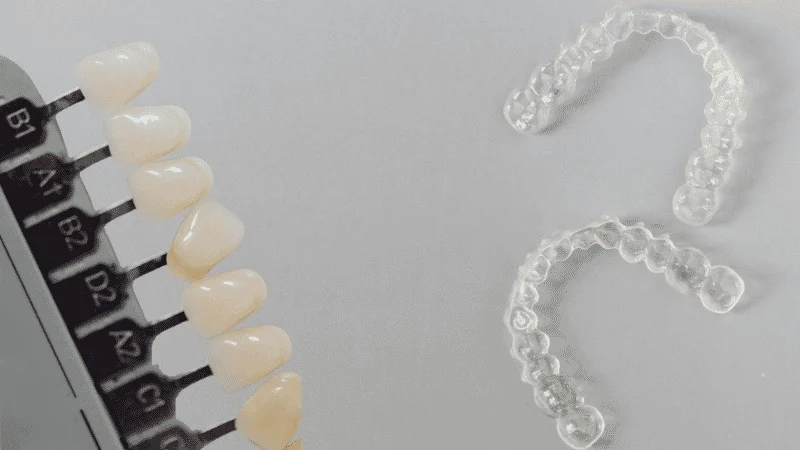
When you want to improve your smile, two popular options often come up: Invisalign and veneers.
While both can give you more confidence in your appearance, they work in completely different ways and solve different problems.
Invisalign is an orthodontic treatment that gradually moves your teeth into proper alignment, while veneers are thin shells bonded to your teeth’s front surface to improve their appearance without changing their position.
Understanding which option is right for you depends on what you want to fix. If you have crooked, crowded, or gapped teeth, Invisalign focuses on straightening teeth and correcting alignment issues.
If your teeth are already straight but you want to cover stains, chips, or minor imperfections, veneers might be the better choice. Your cosmetic dentist can help you decide which treatment matches your goals.
The good news is that you don’t have to guess which option will work best. By learning about how each treatment works, what they cost, and how long they take, you can make a smart choice about improving your smile.
This guide will walk you through everything you need to know about both options.
Key Takeaways
- Invisalign straightens misaligned teeth through gradual movement, while veneers cover teeth to improve their appearance
- Treatment timelines vary, with veneers providing faster cosmetic results and Invisalign requiring several months to move teeth
- Costs differ significantly, and insurance may cover Invisalign as orthodontic treatment but typically won’t cover veneers
Table of Content
- How Invisalign and Veneers Work
- Issues Treated: Alignment vs. Cosmetic Improvements
- Who Is a Good Candidate?
- Treatment Process and Timeline
- Costs, Maintenance, and Long-Term Results
- Frequently Asked Questions
How Invisalign and Veneers Work
These two treatments take completely different approaches to improving your smile.
Invisalign aligners gradually shift your natural teeth into better positions using clear trays, while dental veneers cover the front surface of your teeth to change their appearance.
Invisalign System and Clear Aligners Explained
Invisalign treatment uses clear, removable aligners that gently move your teeth over time. Your dentist or orthodontist will take a 3D scan of your teeth to create a custom treatment plan.
You’ll receive a series of clear trays that you wear for about 22 hours each day. Every one to two weeks, you’ll switch to a new set of aligners. Each set makes small adjustments to your tooth position.
The removable aligners let you take them out when you eat or brush your teeth. This makes it easier to maintain good oral hygiene during treatment. You can also remove them for special occasions if needed.
Treatment time varies based on your specific needs. Some people see results in six months, while others may need 12 to 18 months. You’ll have regular check-ups to make sure your teeth are moving as planned.
What to Expect With Porcelain and Composite Veneers
Porcelain veneers require your dentist to remove a small amount of enamel from your teeth to prepare them. This step is permanent and necessary for the veneers to fit properly.
Your dentist will then take impressions to create custom shells that match your desired look.
Composite veneers offer a less invasive option. They’re made from tooth-colored resin and can often be applied in a single visit. Your dentist sculpts the material directly onto your teeth.
Porcelain veneers are more durable and stain-resistant. They typically last 10 to 15 years with proper care. You’ll wear temporary veneers while the lab creates your permanent ones, which usually takes a few weeks.
Both types of dental veneers are bonded to the front of your teeth using special cement. This cosmetic dentistry procedure changes the color, shape, or size of your teeth but doesn’t move them.
![[Tkatch Dentistry] Veneers Pricing Guide NGP Magazine](https://www.tkatchdentistry.com/wp-content/uploads/2026/08/Tkatch-Dentistry-Veneers-Pricing-Guide-NGP-Magazine.webp)
Issues Treated: Alignment vs. Cosmetic Improvements
Invisalign and veneers address completely different dental problems. Invisalign focuses on orthodontic correction to fix how your teeth are positioned, while veneers handle cosmetic concerns about how your teeth look.
Teeth Alignment and Bite Problems
Invisalign is designed for orthodontics and treats alignment issues like crowded or crooked teeth. If you have crooked teeth, crowded teeth, or gaps between your teeth, Invisalign can gradually shift them into better positions.
The clear aligners also correct bite problems. You might have an overbite, underbite, or crossbite that affects how your upper and lower teeth meet. These bite issues can cause jaw pain or make it harder to chew food properly.
Invisalign uses a series of custom trays that gently move your teeth over time. Each aligner makes small adjustments to achieve teeth straightening.
The treatment addresses the root cause of misaligned teeth instead of just covering them up.
This orthodontic correction typically takes several months to complete. Your teeth will be in their proper positions, which can improve both your appearance and your oral health.
Aesthetic Concerns Addressed by Veneers
Veneers are chosen for cosmetic improvements and can transform your smile quickly. They work well for stained teeth that don’t respond to whitening treatments.
If you have teeth with chips, cracks, or worn enamel, veneers cover these flaws.
The thin porcelain shells can also fix minor gaps or reshape teeth that are too small or uneven. Veneers give you an instant smile transformation without waiting months for results.
You can choose the exact shade you want for a brighter appearance. Veneers resist staining better than natural enamel, helping your smile stay white over time.
This option works best when your teeth are already straight. If you have significant misalignment, veneers won’t fix the underlying positioning of your teeth.
Who Is a Good Candidate?
The right treatment depends on your specific dental needs and goals. Invisalign works best for people who need to fix alignment issues, while veneers are ideal for those who want to change how their teeth look cosmetically.
When Invisalign Makes Sense
You’re a good candidate for Invisalign if you have crooked teeth, gaps between your teeth, or bite problems that need correction.
This orthodontic treatment works well for people who want to straighten their natural teeth gradually over time.
Invisalign is perfect if you have good oral health overall but just need your teeth moved into better positions. You need to be committed to wearing the aligners for 20 to 22 hours each day.
You also need to visit your Invisalign provider regularly for check-ups.
Teens and adults both do well with Invisalign treatment. The clear aligners are removable, so you can take them out when you eat or brush your teeth. This makes it easier to keep your mouth clean during treatment.
You might also benefit from Invisalign if you grind your teeth at night, though you may need a night guard after treatment to protect your newly aligned smile.
Who Should Choose Veneers?
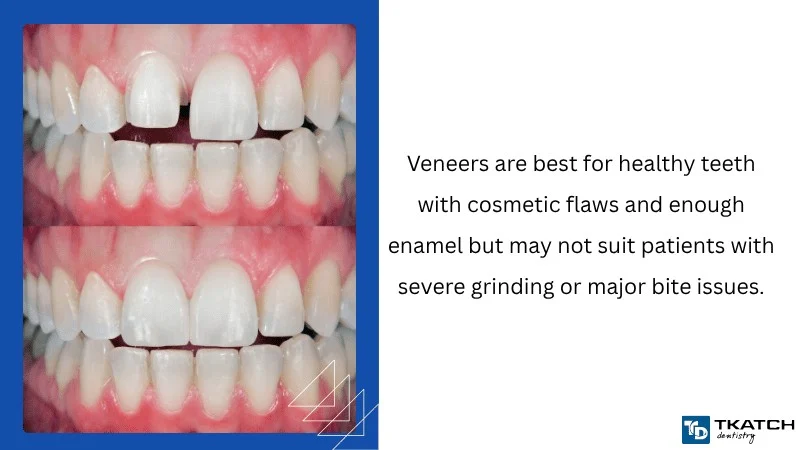
Veneers are your best option if you have teeth that are stained, chipped, cracked, or slightly misshapen. A cosmetic dentist can use veneers to change the color, size, or shape of your teeth quickly.
You’re a good candidate for veneers if your teeth are already straight but you don’t like how they look. Veneers work well for people who want fast results without months of orthodontic treatment.
Your teeth need to be healthy before getting veneers. You should have enough natural enamel left because the dentist will remove a thin layer to bond the veneers.
Veneers aren’t reversible, so you need to be sure about this permanent change.
People with severe grinding problems or major bite issues might not be good candidates for veneers. The pressure can damage the veneers over time.
Combining Treatments for a Complete Smile Makeover
Some people get the best results by using both treatments together. You might need Invisalign first to straighten your teeth, then veneers afterward to perfect the appearance.
A complete smile makeover often starts with orthodontic treatment to fix alignment issues. Once your teeth are in the right positions, your cosmetic dentist can add veneers to improve color or shape.
This combination gives you teeth that are both straight and beautiful.
Your dentist or orthodontist can create a treatment plan that addresses both functional and cosmetic concerns. They’ll look at your oral health and listen to your goals before recommending whether you need one treatment or both.
This two-step approach takes longer and costs more, but it gives you the most comprehensive results. Many people find that combining both treatments creates their ideal smile when neither option alone would be enough.
Treatment Process and Timeline
The Invisalign treatment process typically takes 12 to 18 months, while porcelain veneers can transform your smile in just a few weeks. Each option follows a different path to improve your appearance.

Step-by-Step Invisalign Treatment
Your journey with the clear aligner system starts with a consultation where your dentist or orthodontist scans your teeth using digital imaging. This creates a 3D model that shows how your teeth will move over time.
You’ll receive your first set of custom aligners and wear them for 20 to 22 hours each day. Every one to two weeks, you’ll switch to a new set of aligners that gradually shift your teeth into position.
Check-up appointments happen every six to eight weeks so your provider can track your progress. The total treatment time depends on how complex your case is. Some people see results in as little as six months.
After your teeth reach their final position, you’ll need to wear retainers. These keep your teeth from shifting back to their original spots.
Veneer Preparation and Placement
Getting dental veneers requires two to three visits over about two to three weeks. Your dentist removes a thin layer of enamel from the front of your teeth during the first appointment.
They’ll take impressions to create your custom porcelain veneers or composite veneers. You might wear temporary veneers while the lab makes your permanent ones.
At your final visit, your dentist bonds the veneers to your teeth using special dental cement. They’ll check the fit and make adjustments to ensure everything looks natural.
With proper care, porcelain veneers can last 10 to 15 years before needing replacement.
Costs, Maintenance, and Long-Term Results
The financial investment and upkeep requirements differ significantly between these treatments.
Invisalign requires ongoing retainer use while veneers need eventual replacement, and each option comes with its own price range and maintenance routine.
Comparing Invisalign and Veneers Costs
Invisalign treatment typically costs between $3,500 and $5,500 for the complete process. The final price depends on how complex your case is and how long treatment takes.
Veneers price differently because you pay per tooth. Composite veneers run from $100 to $400 per tooth, while porcelain veneers cost between $400 and $1,000 per tooth.
f you need veneers on eight to ten teeth for a full smile makeover, your total cost could reach $8,000 to $10,000.
Your budget needs to factor in the number of teeth you want to treat. Invisalign has one fixed price regardless of how many teeth move. Veneers multiply in cost with each additional tooth you cover.
Many dental practices offer payment plans or financing options for both treatments. Check if your dental insurance covers orthodontic work like Invisalign, though cosmetic procedures like veneers rarely receive coverage.
Results, Maintenance, and Durability

Invisalign straightens your natural teeth and can last indefinitely if you wear your retainers as directed and maintain good oral health.
Your results stay permanent as long as you follow your orthodontist’s instructions about retainer wear.
Veneers last between 4 to 8 years for composite versions and 10 to 15 years for porcelain options. You’ll need to replace them eventually, which means additional costs down the road. The shells can chip, crack, or become discolored over time.
Daily maintenance for Invisalign involves brushing and flossing your teeth normally, plus cleaning your aligners. After treatment ends, you just wear retainers at night and keep up regular dental hygiene.
Veneers require careful brushing and flossing to prevent gum disease around the edges. You should avoid biting hard foods or objects that could crack the porcelain or composite material.
Regular dental checkups help monitor the condition of your veneers.
Post-Treatment: Retainers, Whitening, and More
After Invisalign treatment finishes, you’ll receive retainers to keep your teeth in their new positions. You wear them full-time initially, then switch to nighttime wear. Skipping retainer use can cause your teeth to shift back.
Teeth whitening works well after Invisalign since you’re whitening your natural teeth. You can get professional treatments or use at-home kits whenever you want to brighten your smile.
Veneers don’t respond to whitening treatments because they’re made from porcelain or composite materials. You pick your shade before placement, and that color stays permanent.
Your natural teeth around the veneers can still be whitened, which might create color mismatches.
If you later want dental implants or composite bonding on other teeth, having completed Invisalign treatment gives you more flexibility. Your teeth are properly aligned, making additional cosmetic work easier to plan and execute.
Frequently Asked Questions
People choosing between these two treatments often have similar questions about what each one can fix, how much they cost, and how they affect your natural teeth.
The answers depend on whether you need to move your teeth into better positions or just want to change how they look.
What kinds of smile issues can Invisalign fix compared to veneers?
Invisalign works to straighten your teeth and fix bite problems. It can handle crowded teeth, gaps between teeth, and certain alignment issues with your bite.
Veneers don’t move your teeth at all. They cover up cosmetic problems like chips, cracks, or discoloration on the front surface of your teeth.
If you have crooked teeth or spacing issues, you need Invisalign to actually move them. If your teeth are already straight but you don’t like their color or shape, veneers can change their appearance.
How do the total costs usually compare between Invisalign and veneers?
The cost depends on how many teeth need treatment. Invisalign pricing varies based on how complex your case is and how many aligners you need.
Porcelain veneers cost between $900 and $1,200 per tooth on average. If you want veneers on six front teeth, you’re looking at $5,400 to $7,200 or more.
Your dental insurance might cover up to $3,000 for Invisalign since it’s orthodontic treatment. Veneers usually aren’t covered by insurance because they’re considered cosmetic.
How long does it typically take to see results with Invisalign versus getting veneers?
Veneers give you instant results once they’re bonded to your teeth. The whole process takes a few weeks because your custom veneers need to be made in a lab, but the actual change happens in one appointment.
Invisalign can show noticeable changes in as little as six months. More complex cases might take 12 to 18 months to complete.
You need to think about whether you want a quick cosmetic fix or gradual movement of your actual teeth. The timeline really depends on what problem you’re trying to solve.
Which option looks more natural in photos—Invisalign results or porcelain veneers?
Invisalign keeps your natural teeth, so the results look like your real smile, just straighter. Your teeth keep their natural texture and slight color variations.
Veneers can look very natural if they’re done well, but they give all your covered teeth a uniform appearance. Some people love this perfectly matched look, while others prefer the character of natural teeth.
The quality of veneers matters a lot for how natural they look. Cheaper veneers can sometimes look too white or too perfect, which makes them obvious in photos.
Is Invisalign a better choice if I’m worried about damaging enamel or tooth sensitivity?
Invisalign doesn’t remove any of your natural tooth structure. The aligners sit over your teeth and gently shift them without cutting or grinding.
Getting veneers requires removing a small amount of enamel from the front of your teeth to make room for the veneer to bond. This process is permanent because the enamel doesn’t grow back.
Some people experience tooth sensitivity after getting veneers, especially to hot and cold temperatures. If keeping your natural enamel intact is important to you, Invisalign is the safer choice for your tooth structure.
When might crowns make more sense than veneers for improving the look of teeth?
Crowns cover your entire tooth instead of just the front surface like veneers do. You might need a crown if your tooth has a large filling, significant decay, or has had a root canal.
Veneers work best when the tooth structure underneath is healthy and strong. They’re meant for cosmetic changes, not structural repairs.
Your dentist will recommend dental crowns over veneers if your teeth need both cosmetic improvement and structural support. Crowns cost more than veneers but provide protection for damaged teeth that veneers can’t offer.