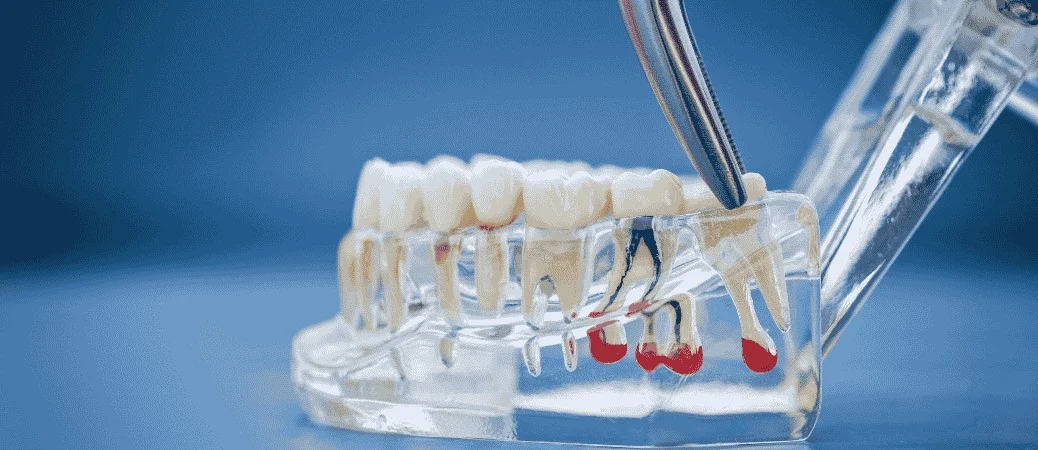
If your extraction site is healthy, an implant can be placed the same day the tooth comes out, about 6 to 8 weeks later, or after 3 to 6 months of bone healing.
Your tooth extraction to implant timeline depends on the condition of your jawbone, whether an infection is present, and how well the extraction site heals.
That first wait is only part of the timeline. After the implant goes in, the bone needs several more months to bond with it before your final crown is placed.
From extraction to finished tooth, most people should plan on about 3 to 9 months. Large grafts can push that closer to a year.
At Tkatch Dentistry, this question sits right where oral surgery meets restorative care.
Once you know which healing window fits your mouth, you can plan your temporary tooth, your work schedule, and your budget with fewer surprises.
Key Takeaways
- Implants can be placed the same day, after 6 to 8 weeks, or after 3 to 6 months, depending on how the site heals.
- Bone loss, infection, and grafting are the biggest factors that lengthen the wait.
- A same-day implant rarely means a same-day permanent crown, because the bone still has to fuse to the implant.
When Can an Implant Be Placed After Extraction?
Dentists use three main timing windows for dental implants after tooth extraction: immediate, early, and delayed. Each one trades speed against how much healing has happened, and your mouth decides which one is safe.
The table below shows how the three options compare as planning guides.
| Timing option | When the implant goes in | Best suited for |
| Immediate | Same visit as extraction | Healthy, infection-free sockets with intact bone walls |
| Early | About 6 to 8 weeks later | Sites that need the gums to close first |
| Delayed | About 3 to 6 months later | Infected sites, molars, grafted sockets, health risks |
Can the Implant Be Placed on the Same Day?
Yes, but only some people qualify. Immediate implant placement means the tooth comes out and the implant post goes into the fresh socket during the same visit. You get one surgery and one recovery.
An immediate dental implant works best when the socket has no active infection, the bone walls around the root are intact, and the implant can be screwed in tightly enough to stay still while it heals.
Front teeth are common candidates, since placing the implant right away can help hold the shape of the gumline.
The research is honest about trade-offs. Immediate implants may carry higher risks of failure and complications than delayed ones, while the cosmetic result might be better.
Immediate dental implants are a good option for the right site, and plenty of people are better served by waiting.
When Is Early Placement an Option?
Early placement happens after the gums have closed over the socket, usually around 6 to 8 weeks after extraction. By then the soft tissue has healed, but the bone has not fully remodeled and shrunk yet.
This middle path gives your dentist healthy gum tissue to work with and a cleaner site than a fresh socket.
Implant specialists formally group timing into types, with type 1 as immediate and type 2 as early placement, and early placement is a popular choice in the smile zone.
Early placement makes sense when your tooth had a small infection that needed time to clear, or when the gum was too thin to close neatly around an implant on day one.
Why Might Placement Be Delayed for Several Months?
A delayed placement of about 3 to 6 months lets the socket fill in with solid bone before the implant goes in. This is the most common route and the safest one for many mouths.
Your dentist may suggest a delay if the tooth was badly infected, if it was a large back molar with several roots, or if a bone graft was placed at extraction.
The extra time is part of the plan. It gives the implant the strongest possible foundation, and it lowers the chance of problems later.
What Determines Your Waiting Period?
Your wait comes down to the condition of the socket, how much healthy bone remains, whether grafting is needed, and your general health.
At Tkatch Dentistry, Dr. Stas Tkatch can evaluate these factors and help determine an appropriate timeline for implant placement based on your individual needs.
Does the Extraction Site Have Enough Healthy Bone?
Bone density and bone volume are the first things your dentist checks. An implant needs enough bone around it to hold firm, much like a screw needs solid wood.
After a tooth comes out, the jawbone starts to shrink because the root no longer stimulates it. Ridge can lose nearly 50% of its width over 12 months, with much of that loss early on.
A 3D cone-beam scan shows your dentist the height and width of the bone, plus nearby nerves and sinuses, before anyone picks a date.
Will a Bone Graft or Sinus Lift Add Time?
A graft adds healing time, but it is often what makes a strong implant possible. A small socket graft placed at extraction barely changes your schedule, while a larger graft done later adds months.
Here are common grafting timelines to plan around:
- Socket preservation graft: placed the day of extraction, with about 3 to 6 months of healing before the implant.
- Larger ridge or block graft: a separate procedure that can add about 4 to 9 months.
- Sinus lift: used for upper back teeth when the sinus sits too close, with about 4 to 9 months of healing.
A European consensus group described protocols where a site preserved with grafting heals for more than 16 weeks before implant placement.
For more on how this works, read our guide to a bone graft for dental implant treatment.
How Do Infection, Health, and Extraction Complexity Affect Timing?
Infection is one of the most common reasons to wait. Bacteria in the socket interfere with healing, so your dentist will want the area clean and calm first.
Your oral health and medical history matter too. Gum disease, smoking, uncontrolled diabetes, and some medications slow healing.
If any of these apply, our post on dental implants with diabetes or osteoporosis explains what changes.
A surgical extraction for a broken or deeply rooted tooth leaves a bigger wound than a simple one, so it needs more healing.
Impacted wisdom teeth are a separate case: they are rarely replaced with implants at all, since most people chew well without them.
You can also review our dental implant candidacy guide to see what makes someone a good fit.
What Happens Between Extraction and the Final Crown?
The full path runs through socket healing, implant surgery, bone fusion, and then the abutment and crown. Most of that time is quiet healing under the gums, with only a few short appointments along the way.
How Does the Socket Heal After Extraction?
Socket healing starts with a blood clot that forms in the first day or two. That clot protects the bone and nerves and acts as the base for new tissue.
Here is what the first two months look like for most people:
- Days 1 to 3: the clot settles and swelling peaks around day 2 or 3.
- Days 3 to 7: gum tissue begins to grow over the opening, and pain fades.
- Weeks 2 to 3: the gum looks closed from the outside.
- Weeks 4 to 8: new bone fills the socket underneath.
Bone healing keeps going for months after the gum looks normal. Our posts on what patients can expect after a tooth extraction and pain duration after tooth extraction cover those first days in more detail.
What Happens During Implant Surgery?

Implant surgery is a short procedure done with local anesthesia, and sedation is available if you feel nervous. A single implant takes about an hour in many cases.
Your dentist opens the gum, shapes a small channel in the bone, and threads in a titanium post. The gum is then stitched over or around it.
Most people describe the soreness as similar to, or milder than, the extraction, and it settles within about a week.
Our guide on what to expect after getting dental implants walks you through recovery day by day.
How Long Do Osseointegration and Crown Placement Take?
Osseointegration, the process of bone growing onto the implant surface, takes about 3 to 6 months. The lower jaw tends to fuse faster because its bone is denser, while the upper jaw and grafted bone take longer.
Once your dentist confirms the implant is stable, the last steps move quickly. Abutment placement attaches a small connector to the implant.
Then impressions or scans are taken, and your permanent crown is made and attached over the next few weeks.
If the gap is visible during healing, ask about a temporary tooth such as a flipper or a bonded bridge so you can smile and work with confidence.
How Can You Protect Your Implant Timeline?
Careful post-extraction care keeps your schedule on track and lowers the risk of implant failure. Small daily habits during the first weeks have a big effect on whether the site heals on time.
What Should You Do While the Extraction Site Heals?
Protect the blood clot first. For the first few days, avoid straws, spitting hard, and rough rinsing, since suction can pull the clot loose.
These habits help most during healing:
- Skip smoking and vaping completely, because they slow healing and raise failure risk.
- Brush your other teeth normally and clean near the site gently.
- Use warm salt water or a prescribed rinse after the first day.
- Eat soft foods for the first week, then slowly return to your normal diet.
- Keep every follow-up visit, including any scan of your dentist schedules.
If soreness is your main worry, our tips on managing pain after oral surgery can help you stay comfortable.
Which Symptoms Should Prompt a Call to Your Dentist?
Some soreness and swelling is normal for a few days. Call your dentist if healing seems to go backward.
Reach out if you notice:
- Pain that gets worse after day 3 or 4, especially with a bad taste or smell
- Swelling that grows instead of shrinking
- Pus, fever, or bleeding that will not stop with pressure
- An implant that feels loose or moves
Swelling that spreads toward your eye or neck, or trouble breathing or swallowing, needs emergency care right away.
Plan Placement Around Healing, Not Just the Calendar

Your implant date should follow your healing, and a few extra weeks of patience often lead to a stronger, longer-lasting result.
Same-day placement is a real option for healthy sites, early placement at 6 to 8 weeks suits many front teeth, and delayed placement at 3 to 6 months is the safest route for infected or grafted sites.
Treat every range here as a planning guide. Your final timeline depends on how your socket heals, how much bone you have, and whether the implant is stable enough to load.
When you meet with your dentist, ask three practical questions: which timing window fits your site, whether you need a graft, and what you will wear for a temporary tooth.
If a tooth needs to come out, the team at Tkatch Dentistry can plan your tooth extraction and dental implants together, so both steps follow one clear schedule.
Frequently Asked Questions
Can you have a tooth pulled and an implant placed on the same day?
Yes, if the socket is free of infection and the bone walls are intact. Your dentist also needs the implant to sit tightly on day one, which a 3D scan helps confirm.
How long can I wait after a tooth extraction to get an implant?
You can wait months or even years, but bone keeps shrinking the longer the gap stays empty. Waiting past a few months often means you will need a graft first.
Is it too late to get an implant years after extraction?
Usually not. Many people get implants years later, though they often need a bone graft or sinus lift first, which adds several months to treatment.
Does a bone graft change when I can get an implant?
Yes, it adds healing time before placement. A small socket graft needs about 3 to 6 months, while larger grafts or sinus lifts can need 4 to 9 months.
Does same-day extraction and implant placement mean I get a permanent tooth that day?
No, not in most cases. You may leave with a temporary tooth, but the permanent crown comes after the bone fuses to the implant, which takes about 3 to 6 months.